Anchor text strategy: safe distributions and real examples
Anchor text strategy for safer rankings: practical distributions, intent-based examples, and quick checks to avoid over-optimization and risky patterns.
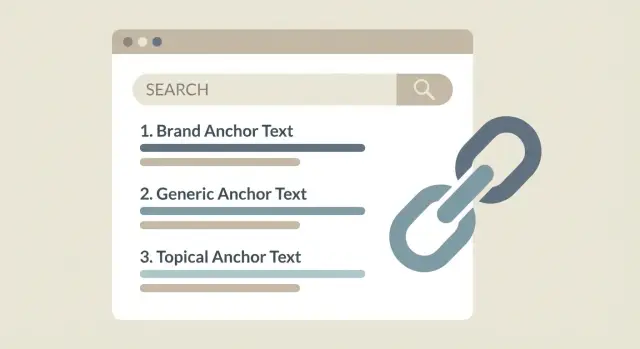
What an anchor text strategy is, and why it matters
Anchor text is the clickable words in a link. If a page links to you and the link says “pricing,” “SEOBoosty,” or “premium backlinks,” those words are the anchor text. It’s a small detail, but it strongly hints at what the linked page is about.
An anchor text strategy is your plan for which kinds of anchors you’ll use across your backlinks, and how often. The aim is simple: stay clear without looking coordinated. Real sites earn links from many places, written by many people, so the anchors naturally vary.
That’s why repeated keyword-heavy anchors can look unnatural. People don’t reference a brand or page the exact same way every time. If ten different websites all link using the same “money keyword,” it can read like planning instead of a genuine mention.
Search engines also don’t judge anchor text one link at a time. They look for patterns. A single exact-match anchor usually isn’t the problem. Risk rises when exact-match anchors show up too often, too suddenly, or mostly point to one commercial page.
A practical anchor text strategy helps you decide which anchors fit each page, how to mix branded, topical, and neutral anchors, and how to keep new links consistent with your existing profile.
It won’t guarantee rankings, and it won’t make any link automatically “safe.” The goal is to avoid over-optimization signals while building a link profile that makes sense to humans. If you’re building links to a homepage, branded anchors like “SEOBoosty” or “SEOBoosty.com” often make more sense than repeating a keyword every time. For a guide post, a partial, descriptive anchor like “anchor text distribution” usually reads more naturally than a hard commercial phrase.
If you buy or place links from curated inventories (including services like SEOBoosty), an anchor plan matters even more because you control the wording. Without a plan, it’s easy to “over-fix” anchors and accidentally create patterns that stand out.
The main anchor types (brand, topical, commercial, and more)
A good strategy starts with knowing the anchor types search engines see every day. Each one signals something slightly different about the linked page and why it deserves the click.
Branded anchors
Branded anchors use your company name, product name, or domain name (with small variations). They’re often the safest because they’re common in natural mentions.
Examples: “SEOBoosty,” “SEOBoosty backlink service,” “seoboosty.com.”
Topical (descriptive) anchors
Topical anchors describe the page without pushing a buying keyword. They’re the kind of label a reader expects inside a sentence.
Examples: “anchor text best practices,” “how to write anchors for a blog,” “guide to internal linking.”
Commercial (keyword-like) anchors
Commercial anchors look like terms someone would search when they want to buy, compare, or sign up. These are the most likely to trigger over-optimization when repeated.
Examples: “buy backlinks,” “best SEO link building service,” “backlink pricing.”
Neutral and URL-style anchors
Most backlink profiles also include a lot of neutral anchors, such as “learn more,” “read this,” or “this article,” plus “naked URLs,” where someone pastes a raw domain or full page address. These often happen in quick citations and source lists.
A simple way to think about it:
- Branded and topical anchors explain who you are and what the page covers.
- Commercial anchors push for rankings on a specific buying phrase.
If you’re building links on purpose (including when you pick placements from a curated inventory like SEOBoosty), treat commercial anchors like seasoning, not the meal.
One fast test: if the anchor sounds awkward when read out loud inside a normal sentence, it’s probably too aggressive.
Match anchor text to page intent, not just keywords
A safer strategy starts with a basic question: what does the reader expect after they click? If the anchor promises one thing and the page delivers another, it hurts trust and can look unnatural.
Think of anchor text like a label on a door. The label should match what’s behind it, not the keyword you wish the door ranked for.
Match the anchor to the page type
Different pages have different jobs, so their anchors should sound different too.
Homepages usually fit brand or URL-style anchors because people expect to “meet” the brand. Category and service pages tend to work with broad, descriptive anchors. Blog posts often attract topical or neutral anchors because the click intent is informational. Product or pricing pages can handle more action-ready wording, but that’s also where overdoing it gets expensive.
Example: if you link to a beginner guide, an anchor like “buy SEO backlinks” is a poor fit if the page is educational and has no purchase option. Better options include “backlink basics,” “how backlinks work,” or “this guide to backlinks.”
Use the sentence to carry context
You don’t have to cram everything into the clickable words. Let the surrounding sentence do the work and keep the anchor simple.
Example: “We compared three ways to build authority, including editorial mentions on trusted sites, in this backlink guide.” The anchor can be “backlink guide,” while the sentence adds the detail.
A quick intent check: if you clicked this link, would you feel tricked? If yes, rewrite.
Common mismatches to avoid include anchors that imply a deal (“cheap,” “discount,” “best price”) pointing to an info post, exact-match money keywords pointing to the homepage, or anchors that promise a tool/template pointing to a general overview.
If you’re placing links through a service like SEOBoosty, the same rule applies: pick anchors that honestly describe the destination page, then vary the wording so it reads like a real reference.
Safe anchor text distributions you can use as a baseline
A “safe” anchor mix usually looks boring on purpose. When most anchors read like something a real person would click, you reduce the chance of looking engineered.
Here’s a baseline to start from. Treat these as ranges, not targets you must hit exactly:
- Branded (brand name, product name, domain): 50-75%
- Neutral ("click here", "website", "this page", naked URL): 10-25%
- Topical / partial-match (topic words, soft variants): 10-25%
- Commercial / exact-match ("buy", "best", exact query): 0-5%
- Mixed long phrases (brand + topic, or natural sentence anchors): 5-15%
For many growing sites, the “safe” pattern is mostly branded and neutral, a smaller slice of topical anchors, and very limited commercial anchors. If you keep wanting to push commercial anchors higher, that’s often a sign you need more total links, not a more aggressive mix.
Newer sites should be even more conservative because they have fewer links overall, so one aggressive batch stands out. Established brands can often carry more topical variety because their backlink profile is already diverse.
Homepage vs deep pages matters too. Homepages naturally attract more branded and URL anchors. Deep pages (guides, blog posts, category pages) can carry more topical anchors because people reference the subject, not the company.
How to adjust without overdoing it
Avoid big swings. Make small, predictable adjustments:
- New site: stay near the high end of branded + neutral and keep commercial near zero.
- Established brand: allow more topical anchors, but keep commercial capped.
- Homepage links: prioritize branded, URL, and neutral.
- Deep-page links: add topical and mixed phrases, keep exact matches rare.
- Competitive niches (finance, gambling, health): be stricter than the baseline.
No single distribution fits every niche. When in doubt, copy what looks normal for real sites in your space, not what looks “optimal” on a spreadsheet.
Anchor text examples by intent (ready to copy and adapt)
Good anchors sound like something a real person would click. If your plan feels like a keyword list, that’s usually your first warning sign.
Branded anchors
Branded anchors are the safest default, especially for homepages and about pages. Use natural variations people actually type:
“SEOBoosty,” “SEO Boosty,” “SEOBoosty.com,” “the SEOBoosty team,” “Boosty,” “SeoBoosty backlinks.”
Topical anchors
Topical anchors work well for informational pages and guides. Keep them descriptive, not salesy:
“anchor text examples,” “how to choose anchor text,” “a guide to safe anchor text,” “what over-optimization looks like,” “tips for internal links.”
Commercial anchors
Commercial anchors belong on product, category, or service pages. Use exact-match sparingly, and prefer softer phrases that still match intent:
“backlink subscription,” “premium backlinks,” “backlinks from authoritative sites,” “SEO link placement options,” “compare backlink sources.”
If you do use an exact-match keyword, treat it like a rare spice, not the main ingredient.
Neutral anchors
Neutral anchors are fine when the surrounding sentence clearly explains the topic. Examples include “read more,” “this guide,” “see the details,” “learn how it works,” and “check the examples.”
Red flags (avoid these)
Avoid anchors that feel forced or repetitive, like “best cheap backlinks,” “buy backlinks now,” using “anchor text strategy” word-for-word across many sites, or long strings like “safe anchor text distribution avoid over-optimization SEO.”
If you catch yourself copying the same commercial anchor into every new link, swap it for a branded or topical version and let the page title and surrounding sentence do the heavy lifting.
Step by step: build an anchor plan for your next links
A good plan starts with structure, not guessing. When you know which pages you’re trying to lift and what each page is meant to do, it’s much easier to keep anchors natural.
-
Map your target pages and write down the intent. List the pages you want to promote (homepage, category page, feature page, blog post). Next to each, label the intent in plain words: “brand trust,” “inform,” or “sell.”
-
Prepare a small set of brand anchors you can rotate. Aim for 5 to 15 variations that real people might use, including your brand name, brand + descriptor, and your domain without the protocol.
-
Build a topical phrase bank for each page. Don’t pick one “perfect” keyword. Collect related phrases that describe the page naturally. For an email marketing basics guide, that might include “email marketing tips,” “how to write newsletters,” “getting started with email,” and “email list growth.”
-
Set strict caps for commercial anchors and track every use. Decide in advance how often you’ll use exact match or strong “buy” wording. Track anchors in a simple sheet: destination URL, anchor text, anchor type, date, and source. If you use a backlink provider like SEOBoosty, tracking matters even more because placements can scale quickly.
-
Do a final “sounds like a sentence” check. Read the anchor inside the full sentence. If it feels inserted for ranking, soften it with a brand, partial topical phrase, or a simple neutral anchor when it fits.
A practical example: if you’re promoting a product page, you might mostly use brand and topical anchors (“Acme Analytics,” “Acme Analytics pricing,” “analytics for small teams”) and save the most commercial version (“buy analytics software”) for a small number of high-context placements.
The habit that keeps you safest is consistency. Plan the mix first, then place links to match the plan, not the other way around.
Common over-optimization mistakes (and how to fix them)
Most anchor penalties don’t come from one “bad” link. They come from patterns that look manufactured.
Too many exact-match anchors to one page. Cap exact-match anchors and rotate in branded, partial matches, and natural phrasing. If your target phrase is “project management software,” mix in anchors like “Acme project tools” or “see the project tools,” especially when multiple links point to the same URL.
Copy-pasting the same anchor across different sites. Write anchors that fit the sentence. Two posts can link to the same page, but one can say “Acme’s pricing,” another “how Acme charges,” and another “plans and billing.” Repetition across domains is a common footprint.
Anchors that don’t match the topic of the linking page. Match context first, keyword second. A fitness blog linking with “best CRM” looks off. Choose placements where the surrounding topic makes sense, and write anchors that match that topic.
Overusing money terms on low-trust or irrelevant pages. Reserve your most commercial anchors (buy, discount, cheap, best price) for the few placements that are clearly relevant and credible. On weaker pages, use brand, URL, or descriptive anchors.
Forgetting internal links and obsessing over external anchors. Internal links are where you can be clearer about topics without relying on risky external exact-match patterns. Build internal anchors that help users move through your site.
A quick check that catches a lot: read the sentence out loud. If it sounds like an ad, rewrite it to sound like a normal reference.
If you’re buying placements from a curated inventory (for example, on SEOBoosty), don’t treat anchors like a “set and forget” field. Keep a simple log, vary on purpose, and avoid sending a stack of near-identical keyword anchors to the same page in a short time.
Quick checks before you build or buy any links
Before you add the next batch of backlinks, take 10 minutes to check your anchors for repetition. This isn’t about finding the “perfect” keyword. It’s about making sure nothing looks forced or one-sided.
Start with your newest links. Unnatural patterns show up fastest in the last 30 to 90 days. If you only look at “all time,” recent over-optimization can hide in the average.
A simple review:
- Look for repeated anchors in recent links, especially exact-match phrases.
- Check whether one money page is collecting most of your commercial anchors while other pages get none.
- Read each anchor out loud. If it sounds stuffed, it probably is.
- Compare branded vs non-branded anchors over the last 30 to 90 days and see if the balance suddenly shifted.
- Ask whether a real customer, blogger, or partner would describe you this way.
“Natural” doesn’t mean random. It means varied wording, mixed intent, and a believable split between brand mentions and descriptive phrases. If you see five new links in a row pointing to the same page with nearly the same keyword, that’s the pattern to fix.
If you’re buying links, add one extra check
When you use a provider with a curated inventory, you can control anchors more tightly. That’s useful, but it also makes consistency checks more important. Keep a tracker of the last 20 anchors you placed and make sure you’re not repeating the same commercial phrase just because it “sounds good.”
Example scenario: a realistic anchor mix for a growing site
Picture a small local business, “BrightRoof Repairs.” They want to grow rankings for a money page (their roof repair service page) and also push a helpful blog guide (“How to spot roof leak warning signs”). A safe strategy treats each target page differently.
For the homepage, the goal is trust and brand recognition. Most anchors should be brand, domain, or plain wording that looks natural in a sentence. For the service page, add light topical relevance, but keep salesy keyword anchors rare. For the blog guide, lean into topical anchors because the page is informational.
A month of 10 new links could look like this:
- 4 links to the homepage: 3 branded or domain (“BrightRoof,” “BrightRoof Repairs,” “brightroof.com”), 1 neutral (“website”)
- 4 links to the service page: 2 branded (“BrightRoof roof repair”), 1 topical partial (“roof repair in Austin”), 1 neutral (“learn more”)
- 2 links to the blog guide: 1 topical (“roof leak warning signs”), 1 neutral (“this guide”)
Notice what’s missing: repeated exact-match anchors like “roof repair Austin” over and over. Even on the service page, only one anchor is close to a keyword, and it reads like a normal recommendation.
If you already overused exact match
Don’t try to “fix” it by blasting more links quickly. Course-correct slowly with the next wave:
- Point more new links to brand and URL anchors for a while.
- Aim topical anchors at blog posts, not the money page.
- Use longer, sentence-style anchors (“BrightRoof’s roof repair service”) instead of short, repeated phrases.
If you buy placements, you can often specify the anchor up front. That makes planning easier, but it also makes it easier to repeat yourself without noticing.
What to document so you stay consistent
Keep one simple sheet with your target page, page intent (home, service, guide), primary topic, each new link’s anchor text and date, and the anchor type (brand, URL, topical, neutral, commercial). A running tally by page is often enough to spot repetition early.
Next steps: keep it consistent, track it, and stay conservative
A safe anchor text strategy is less about chasing a perfect ratio and more about staying consistent over time. Most sites get into trouble when anchors drift toward the same money keywords again and again, across different sources, with nobody noticing.
Write a short anchor policy your team can actually follow. Keep it simple:
- Default to branded and topical anchors for most new links.
- Use commercial anchors rarely, and only when the linking page genuinely fits.
- Don’t repeat the same keyword phrase across multiple new links in a short period.
- Match anchor style to page intent (homepage: more brand; blog posts: more topical; product pages: light commercial).
- If unsure, choose brand or a simple neutral anchor and let the sentence explain the context.
Track anchors like you track content or spend. A basic spreadsheet is enough, as long as it’s consistent.
If you use premium placements where you choose the domain and the target (like SEOBoosty at seoboosty.com), decide your anchor rules before you order: which pages can receive commercial anchors at all, how many per quarter, and which exact-match phrases you won’t use.
When you’re not sure, stay conservative. A slightly less “optimized” anchor mix is usually safer and more sustainable than pushing aggressive keyword anchors.
FAQ
What is anchor text, and why does it matter for SEO?
Anchor text is the clickable wording inside a link. It matters because it gives search engines and readers a clue about what the linked page is about, and patterns across many links can look natural or overly planned.
When do I need an anchor text strategy instead of just picking anchors randomly?
Use an anchor strategy when you’re building or placing backlinks on purpose and can influence the wording. It helps you stay consistent, avoid repeating the same “money” phrase everywhere, and match anchors to what each destination page actually offers.
Are exact-match anchors always bad?
Exact-match anchors are risky mainly when they show up too often, too quickly, or mostly point to one commercial page. One exact match usually isn’t the issue; the repeated pattern is what can look engineered.
What’s the difference between branded, topical, and commercial anchors?
Branded anchors use your company name, product name, or domain and usually look the most natural for homepages and brand mentions. Topical (descriptive) anchors describe the subject of a page and fit guides and blog posts well. Commercial anchors read like buyer keywords and are the easiest to overdo, so they should be used sparingly.
What’s a “safe” anchor text distribution I can start with?
A practical baseline is to keep most anchors branded, add a smaller share of neutral and topical anchors, and keep commercial/exact-match anchors very limited. The goal is a mix that looks like many different people linked to you for different reasons, not a single repeated keyword plan.
How do I match anchor text to the page I’m linking to?
Match the anchor to click intent: if the page is informational, use descriptive or neutral wording; if it’s a product or pricing page, keep it relevant but not overly salesy. If someone would feel misled after clicking, the anchor is a mismatch and should be rewritten.
Should my homepage and my deep pages use different anchor styles?
For a homepage, branded or URL-style anchors usually make the most sense because people reference the brand. For blog posts and guides, topical anchors read naturally because people cite the subject. For service or pricing pages, use broader descriptive phrases more often and reserve stronger commercial wording for rare, high-context mentions.
What should I do if I already overused keyword-heavy anchors?
Start by reducing or stopping new exact-match anchors to that same page, then use the next wave of links to add more branded, URL, neutral, and topical wording. Don’t try to “fix” it with a sudden burst; the safer move is to course-correct gradually with more natural variety.
What are the most common anchor text over-optimization mistakes?
Over-optimization often comes from repeating the same keyword phrase across many different sites, especially in a short period. Another common issue is using salesy anchors that don’t match the destination (or the linking page’s topic), which makes the link feel inserted rather than referenced.
How should I track anchors if I’m buying or placing links through a service like SEOBoosty?
Keep a simple log of each new link’s destination page, the exact anchor text, the anchor type, and the date so you can spot repetition early. This is especially important when you can choose anchors during placements through curated inventories or services like SEOBoosty, because control makes it easy to accidentally repeat the same commercial phrase.
Share