What you are actually buying
Nothing here runs on trust.
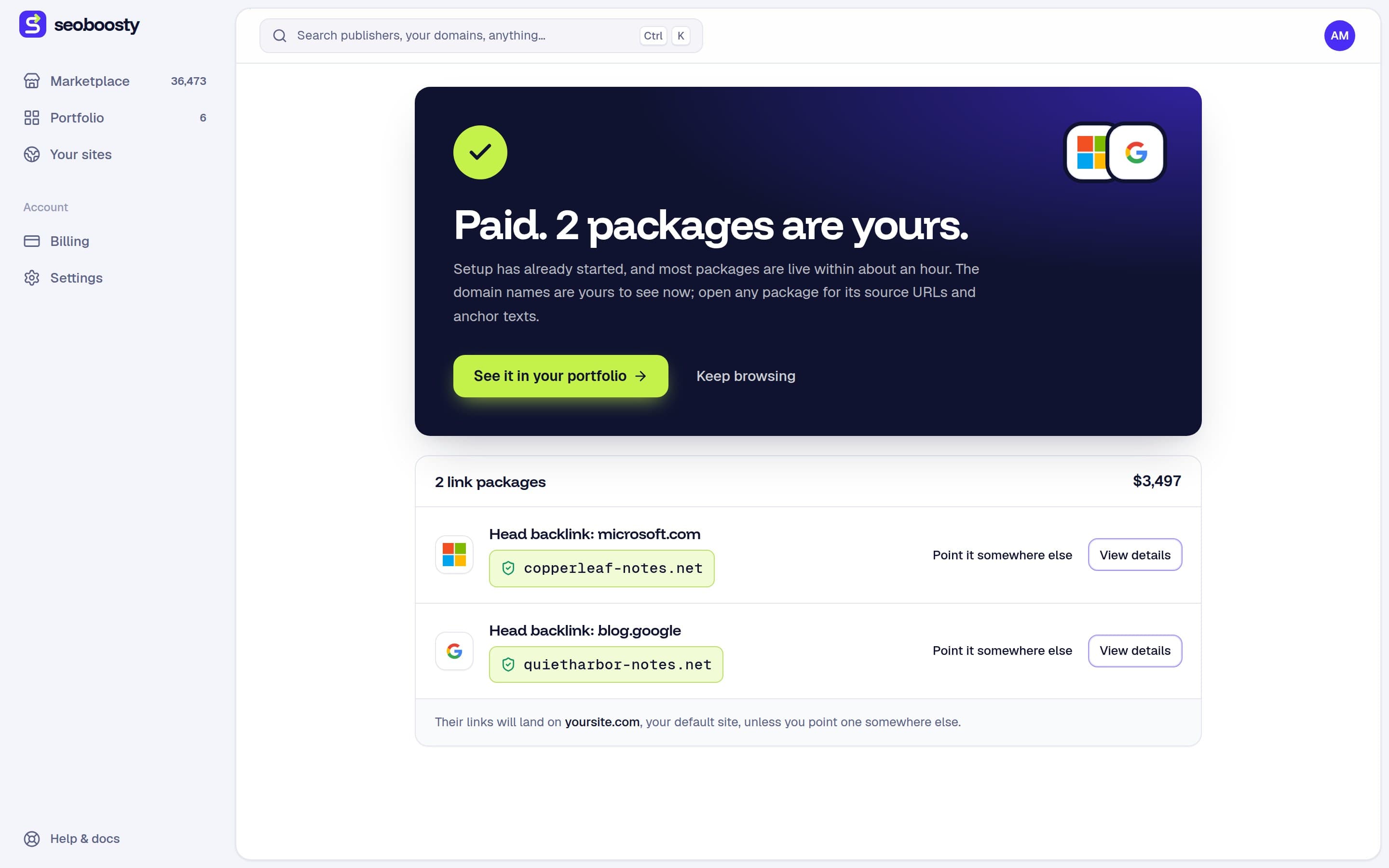
Every number on a listing comes from a page we opened and read. Every delivery is run and checked automatically. Instead of a promise, you get the log.
Verification
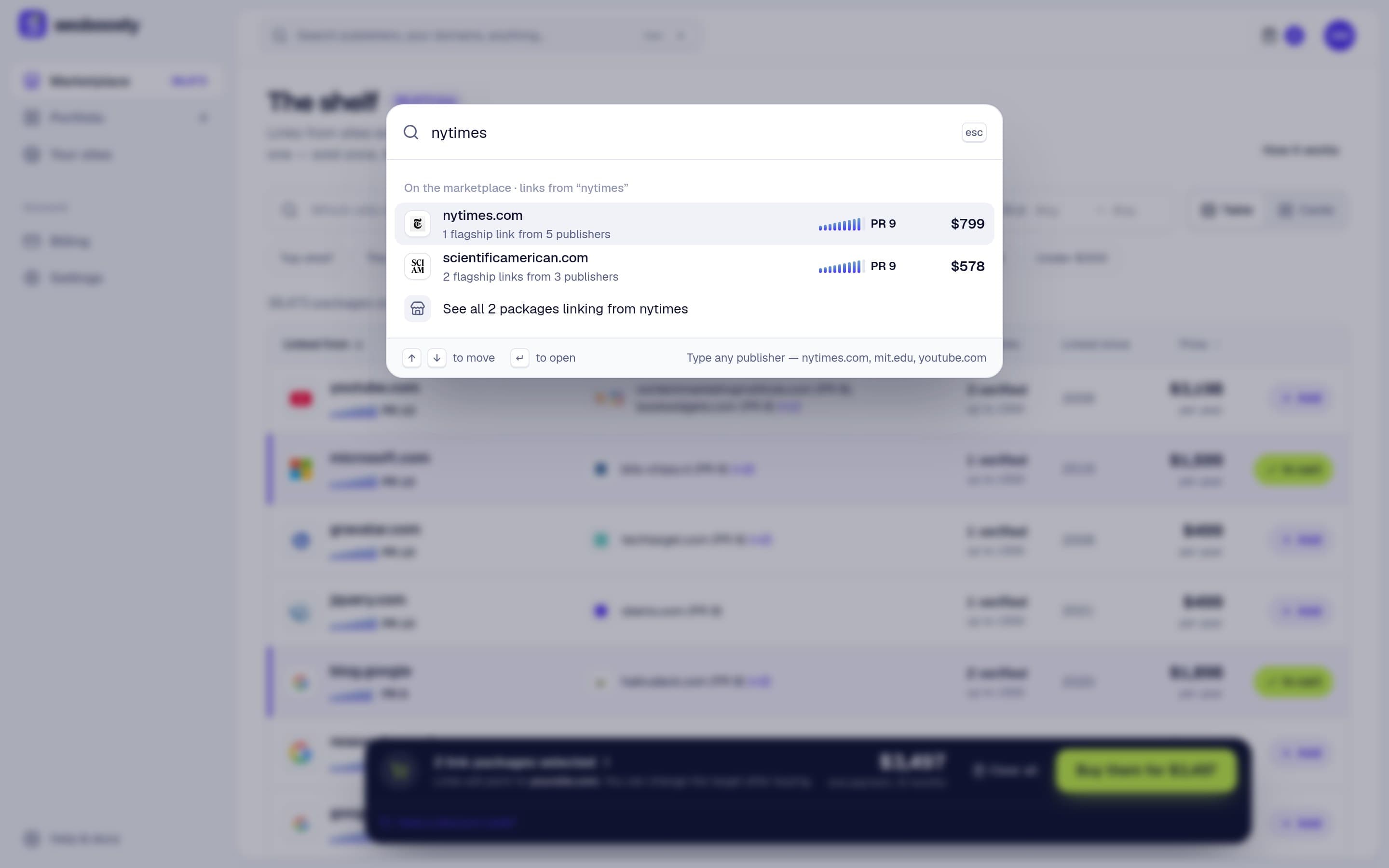
Head link read live before listing, and again before checkout
Dossier
Every URL, anchor and timestamp, released on purchase
Delivery
Working and proved in about an hour
If it fails
Replaced with a comparable package
Evidence
We open the page and read the link.
A listing is the result of fetching the page the link sits on, not a claim about it. When the link goes, the listing goes with it.
- The head link is read live before the backlinks reach the catalog
- It is read again in the seconds before your card is charged, and a dead link cancels the sale rather than completing it
- Only editorial links count: forum posts, author profiles, wikis, mailing lists and directory dumps are thrown out before anything is scored
- A page firing links at five dead addresses at once is discarded along with them
- Publishers are counted one site each, so a pile of subdomains cannot inflate the count
Verification log
- FetchGET the source page, 200 OK
- Parseanchor found, rel read, position editorial
- Matchthe link still points where the listing says
- Stampverified_at written to the listing
Listed. Read again at checkout.
The dossier
Everything opens the moment you own it.
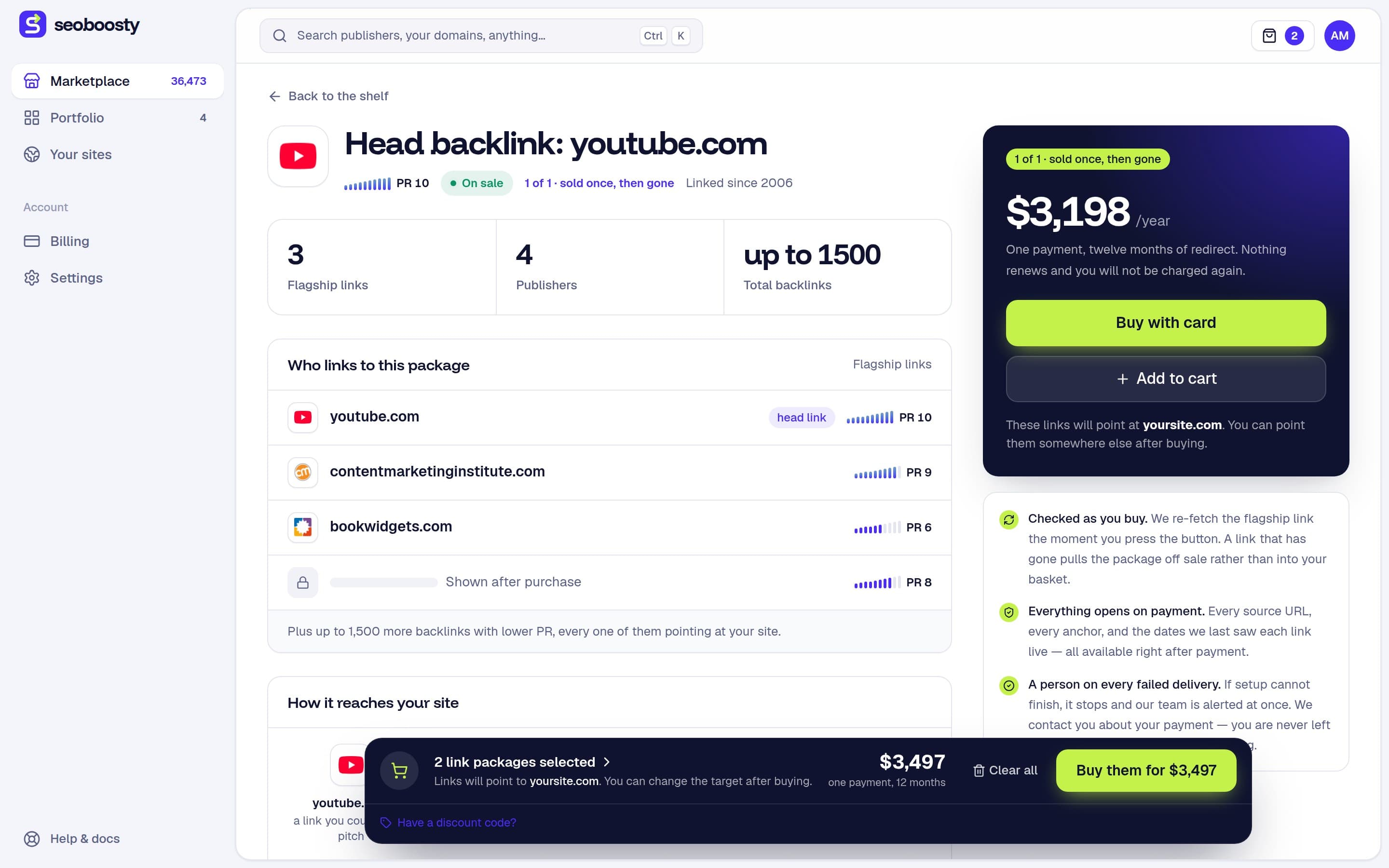
Before the sale you get publishers and counts. After it you get the paperwork: every source page, the exact anchor an editor typed, and the last time we confirmed each one was still standing.
Sealed before purchase
Open after purchase
Example dossier
| Source page | Anchor | First seen | Last checked |
|---|---|---|---|
| blogs.microsoft.com/blog/2012/… | the project page | 2012 | 2 hours ago |
| blog.cloudflare.com/… | built with workers | 2021 | 2 hours ago |
| blog.jquery.com/2009/… | this plugin | 2009 | 2 hours ago |
An illustration of the format. Your dossier carries the real URLs, and every one of them is a page you can open yourself.
Delivery
Four automated steps.
Your order runs itself. Every step retries on its own, so a slow step only means a short delay.
- It retries itself
- Each step can run again without undoing the last one, so an order never sits waiting for someone to notice it.
- You watch it happen
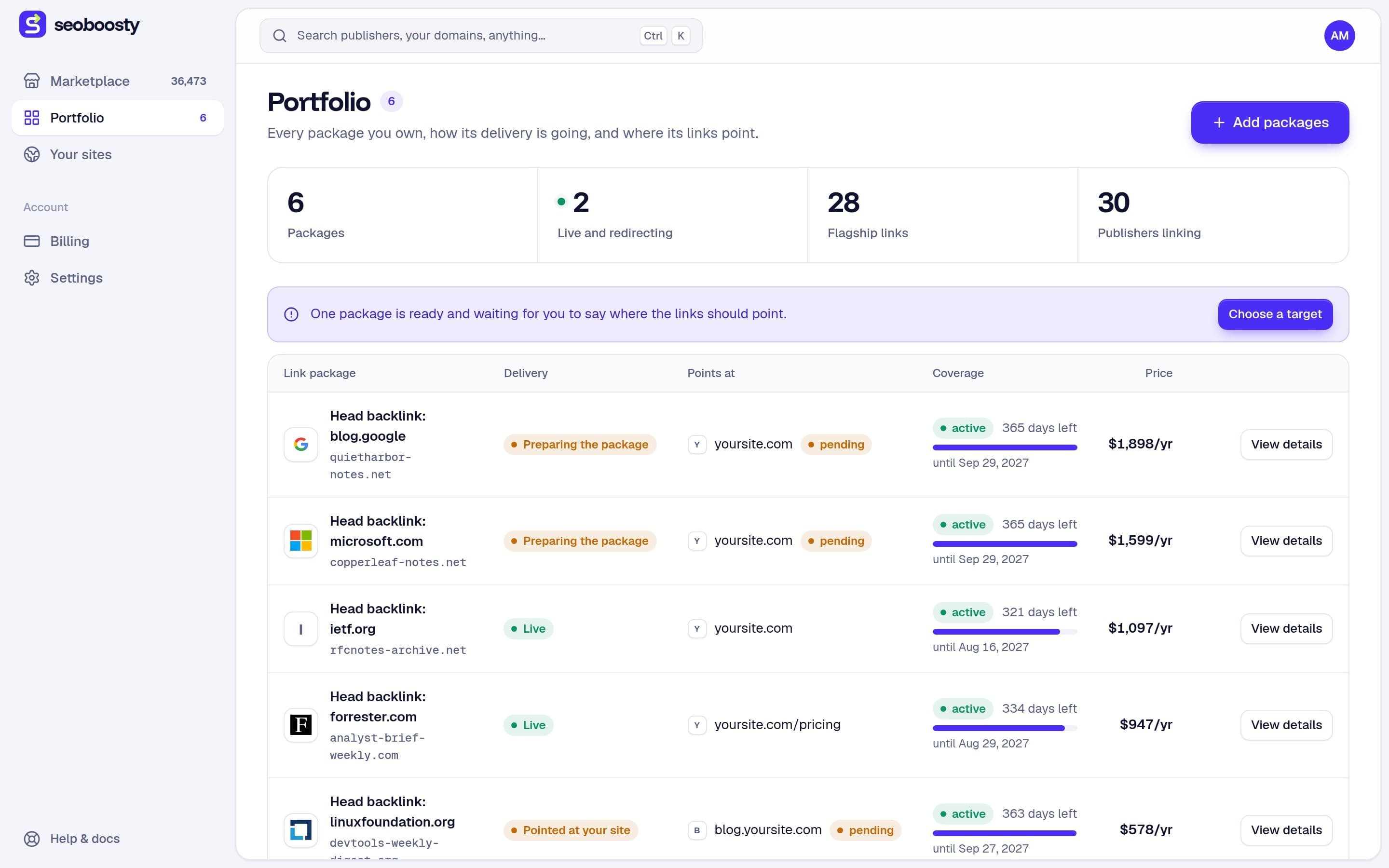
- Your order page shows the state it is in right now, from the moment the payment clears.
- Proved from outside
- Our system saying it worked is not the same as your backlinks working, so the last check runs over the public internet from outside our network.
After it goes live
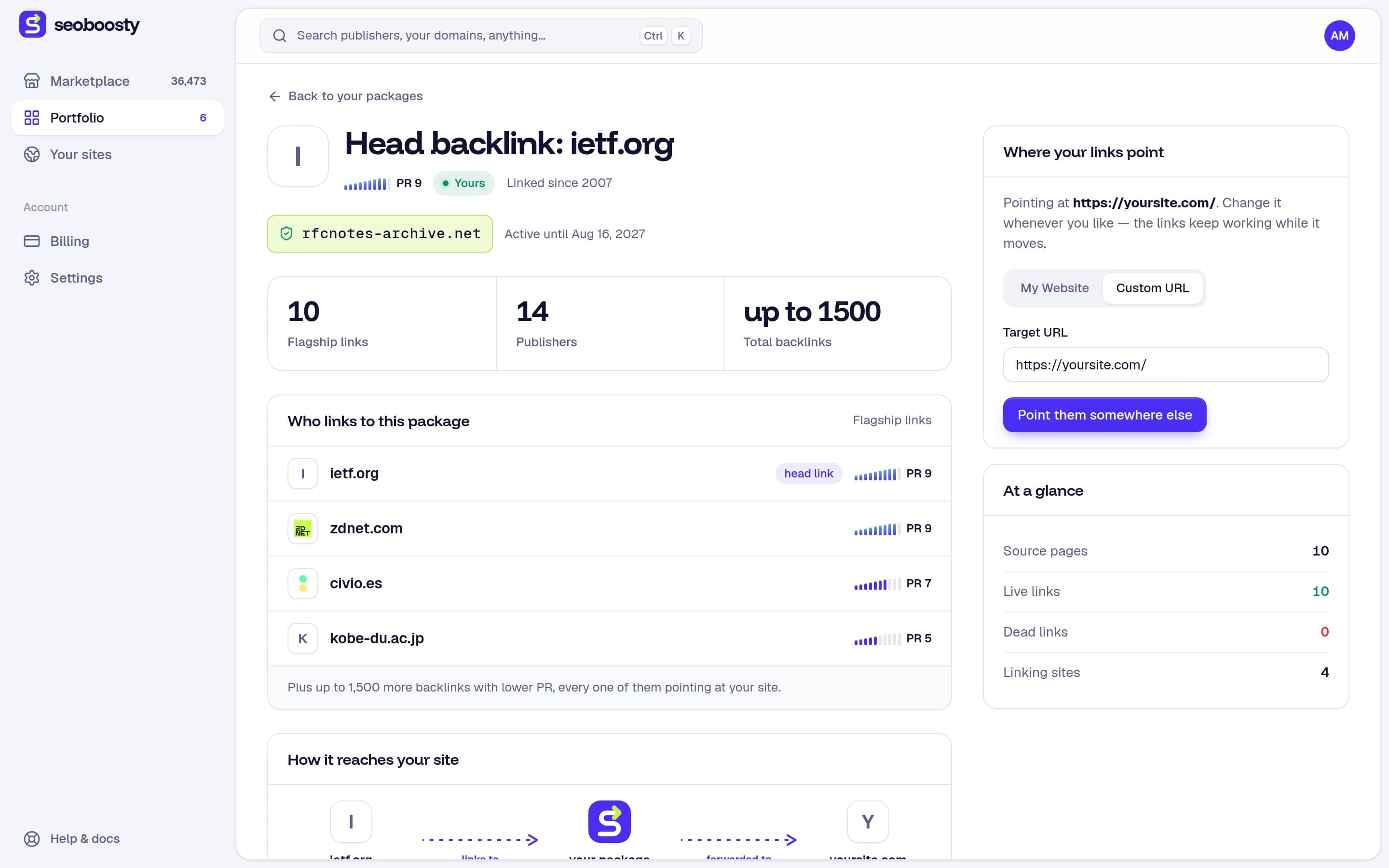
Point the backlinks where you want.
Point it wherever you want
The backlinks land on any URL on your site. Move them to a new landing page, a product, a campaign, as often as you like.
Changes take effect in minutes
A comparable replacement
A delivery that fails, or a step that stalls past a day of retries, stops that order and sends the backlinks back for investigation. A person on our team replaces them with a comparable package.
At no extra cost, without you asking
The catalog
What is in the catalog.
Everything sold leaves the catalog, so it changes every day. These are the numbers behind it.
New backlinks land every night.
2,627
publishers across the catalog
1,204
sets of backlinks headed by a top-tier name
2013
the year the median link was placed
See it on a real listing.
This is easier to judge with a real listing in front of you. Browsing needs a free account.