For local SEO
Local link building without the citation grind.
youtube.com$3,198
microsoft.comfrom$1,599
nytimes.comfrom$799
arstechnica.comfrom$499
mit.edufrom$79
Directory citations stopped moving anything years ago, and the links that still do are the ones a regional newsroom or a university put there. Nobody sells those. They are the publishers at the head of these backlinks.
Covered for 12 months: if a package fails, we replace it with a comparable one. see the terms
- Regional press and institutions
- Point it at a location page
- Live in about an hour
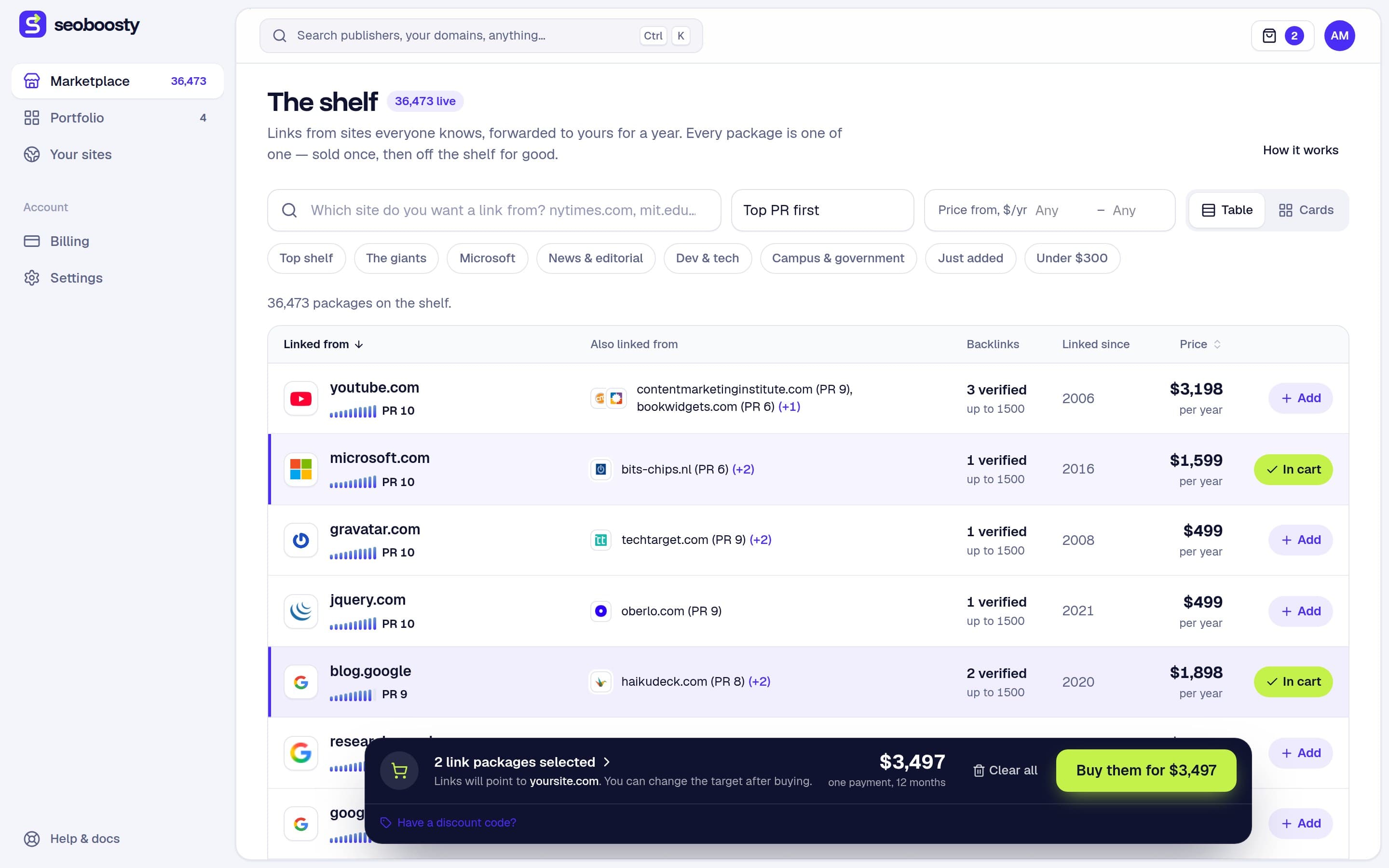
Publishers in the catalog now
Why the usual playbook stalls
Citations are the minimum. Links are what move rankings.
Every competitor in your area has the same eighty directory listings. What separates the top of the map pack from the rest is links from places that do not hand them out.
Regional newsrooms and broadcasters
Public radio, city papers and state news sites are head publishers here, alongside the university pages a local business could never pitch.
One page, all the links
Multi-location sites lose because every location page looks identical and none of them has a link. Your backlinks point at exactly one of them.
Nothing to claim or verify
No listing to keep updated, no NAP to police across a hundred aggregators, and nothing that quietly expires.
Cheaper than a month of citation building
Local link building runs among the most expensive keywords in SEO for a reason. Backlinks here start at $79 a year.
Head publisher
theverge.com
- Does not sell links
- Dofollow
- Placed 2012
- 1,756
- backlinks in total
- 82
- independent sites
The domain name appears in your account as soon as you buy.
$1,299per year
Checked live before you pay
Where to point it
The location page that never gets a link.
Service-area pages are built for search and nobody reads them, so they never earn links on their own. Aged backlinks fix that on the page that turns a map-pack impression into a phone call.
- A single location or service-area page, not the homepage
- The page you are trying to rank for a near-me query
- A second location once the first one moves
- Move it to whichever location needs it as the year goes on
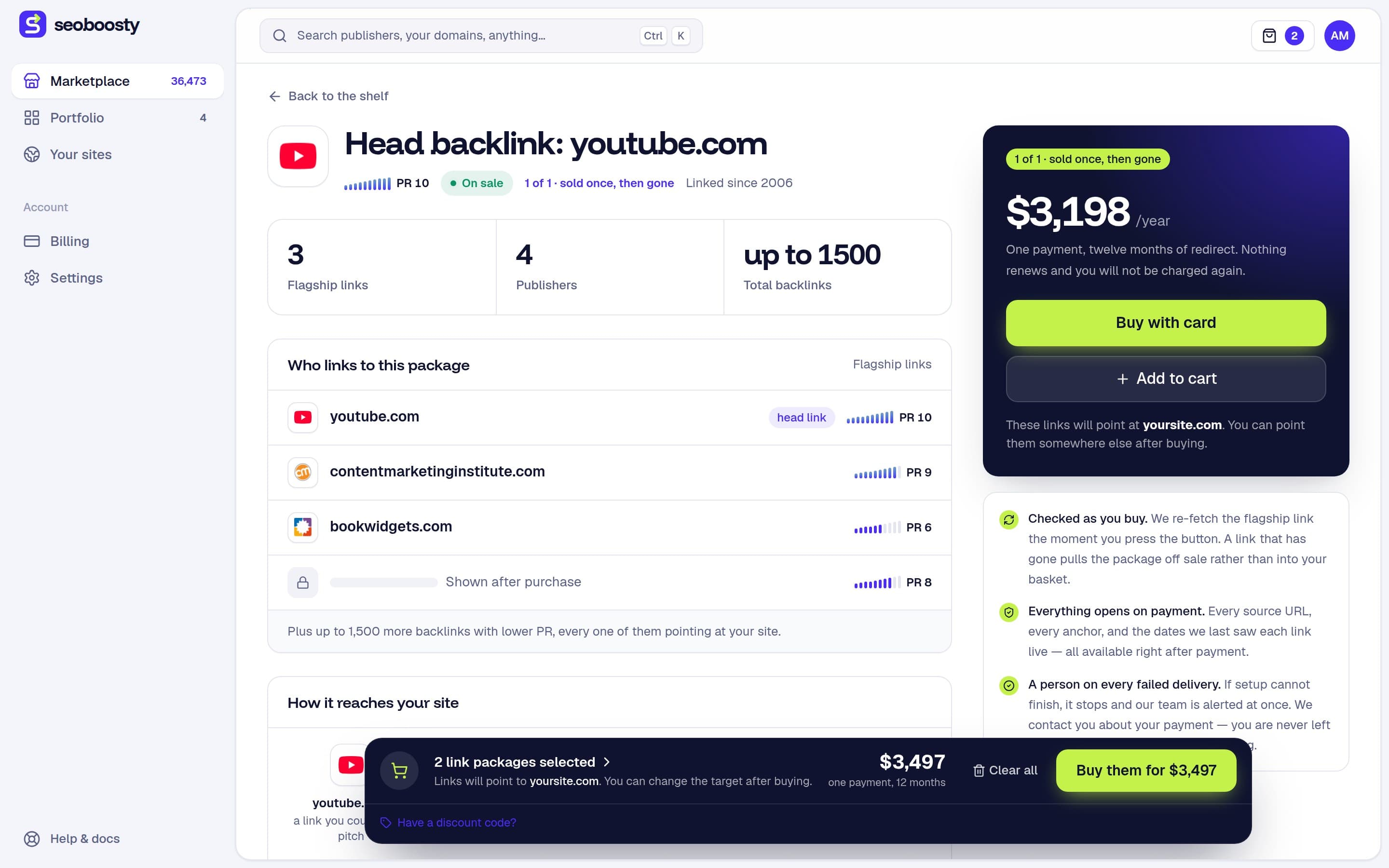
Four real examples and what was in them.
Head publisher, then the number of links that came with it. Every row was a real listing.
- $149
massart.edu
76 backlinks in total · 47 independent sites
- $799
technologyreview.com
142 backlinks in total · 79 independent sites
- $1,299
theverge.com
1,756 backlinks in total · 82 independent sites
- $1,999
microsoft.com
385 backlinks in total · 169 independent sites
Questions
What local teams ask.
- Do the links have to be local to my city?
- Local relevance helps and topical relevance helps more. The catalog filters by subject, and regional publishers are a large part of it, so you match what you can and take authority where you cannot.
- Is this a replacement for citations?
- No. Citations are table stakes and cost almost nothing. This is the layer above citations, which is what separates the top three from everyone else.
- Can I use one per location?
- Yes, and that is the usual pattern. Each order points at one URL, so a multi-location site buys one at a time and aims each where it is needed.
- Will this help the map pack?
- Links to the location page are one of the inputs behind local rankings. Anyone who tells you a single link moves a map pack on its own is selling you something.
- How fast is it?
- About an hour from payment to working. There is no listing to be approved and nobody to verify anything.
- What does it cost?
- From $79 a year, one payment. No monthly citation retainer attached.
Aim one at a location page.
Open the catalog, filter by topic, and see what you get before you spend anything.
Covered for 12 months: if a package fails, we replace it with a comparable one.see the terms