Backlinks to About Page: Trust Signals That Lift Conversions
Learn how backlinks to About page and leadership bios can strengthen trust signals, reduce buyer hesitation, and indirectly lift conversions without salesy content.
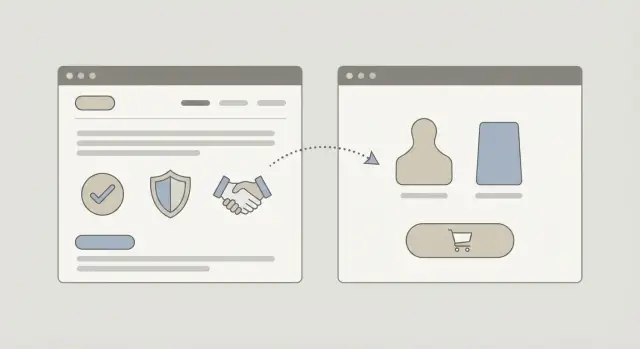
Why About and leadership pages affect conversions
Most SEO plans focus on product pages and blog posts. Meanwhile, the About page and leadership page get treated as "nice to have". But when a buyer hesitates, these are often the pages they open to decide whether you're real, competent, and safe to buy from.
That’s why credibility links can matter even if an About page never ranks for a big keyword. A third-party mention from a respected site works like a quiet reference. Many people won’t click the link itself. But if they notice you’ve been cited elsewhere, it reduces doubt.
When trust is missing, it usually doesn’t show up as "I don’t trust you." It shows up as friction:
- someone checks pricing, clicks About, then leaves
- a demo request gets started but never finished
- a buyer compares you to a competitor and picks the "safer" brand
Credibility matters most when the decision feels risky: higher prices, B2B deals where someone’s reputation is on the line, and anything tied to personal data, health, finance, or compliance. In those moments, people want proof that there’s a real team, a track record, and clear accountability.
Leadership pages help because they put names and faces behind the offer. A cautious buyer scans for signals like relevant experience, a consistent story across the site, and something they can verify outside your own copy.
The trust signals that people actually notice
Most visitors don’t read your About page like a story. They scan it like a receipt. They want quick answers: Who is behind this? Have you done this before? Can I trust you with my money or my time?
A leadership page often builds more trust than another paragraph of marketing copy. Seeing real people with clear roles reduces the fear of scams and low-quality service. It also signals accountability: if something goes wrong, there’s a known team, not a faceless logo.
The key difference is proof versus claims. Your site can claim anything, even if it’s true. Proof is when someone else backs you up.
Trust signals people pick up in seconds include:
- real names and roles (not just "Team")
- specific experience and relevant past work (not vague "10+ years")
- consistent details across pages (company name, location, email)
- third-party mentions (press, partners, respected sites)
- a calm, specific tone (no hype)
This is why leadership page backlinks and backlinks to About page content can matter even when the page isn’t trying to rank. A trusted mention changes the story in a buyer’s head from "they say they’re legit" to "others know them and are willing to be associated with them."
Which pages to target (and what each one should do)
Not all trust pages pull the same weight. The best targets are the pages a careful buyer checks when they feel unsure: "Are these people real, and do they actually do what they claim?" Think of credibility links as support for your story, not just a way to boost a URL.
Start with pages that answer one clear question
About page: Explain what you do in plain language, who you do it for, and why the company exists. Add a short history only if it helps. Skip hype.
Leadership page: Use real names, clear roles, and what each person owns day to day. Tie background to the buyer’s risk (security, compliance, operations, outcomes).
Team page: Useful when customers expect a people-heavy service (agency, consulting, medical, local services). If it’s just a grid of headshots with no context, it can backfire.
Press and awards: Only include items you can explain quickly: what it was, who gave it, and why it matters. Avoid vague "As seen in" blocks and outdated badges.
Contact and location details: Make the business feel reachable. Clear support options and consistent contact info reduce the "faceless website" feeling.
A simple way to choose: imagine a buyer comparing you to a competitor. If they clicked only one page to decide whether to book a call, which page would it be? Start there.
Prepare the page so backlinks reinforce it
A credibility link can send someone to your About or leadership page at the exact moment they’re deciding whether to trust you. If that page feels thin, the link doesn’t help.
Aim for specifics you can stand behind. State what you do, who you do it for, and what a successful outcome looks like. Add clear scope (what you don’t do), a short timeline or history, and a few numbers that stay true even on a bad day (years operating, team size, customers served, response times). Vague claims like "industry-leading" raise eyebrows.
Make leadership feel real
Leadership bios work best when they read like a person, not a headline. Include relevant past roles, domains you’ve worked in, and what each leader owns today. One or two concrete details beat a paragraph of buzzwords.
Before you invest in E-E-A-T credibility links, remove the common trust killers:
- stock-looking photos, or no photos at all when you’re asking for trust
- inflated claims without proof (especially awards or "#1" statements)
- missing basics: legal company name, location, contact method, and what you sell
- mismatched details across the site (names, titles, dates, product description)
- pages that never answer the obvious question: "Why should I believe you?"
Keep brand details consistent everywhere a buyer might cross-check. Use the same company name, product description, audience, and location wording.
A simple plan for earning credibility backlinks
Start by naming the real goal, because it changes where links should point.
- If you want more sales, you’re trying to reduce buyer doubt.
- If you want partnerships, you need to look stable and reliable.
- If you’re hiring, people need to believe the team is real and worth joining.
Next, pick the page that best carries that trust. An About page is often the safest choice when you need broad credibility fast. A leadership page works better when prospects want to see who’s accountable. A founder bio is strongest when the founder is part of the product story (and prospects often search their name).
Choose one target and one message
Before you think about sources, decide what the backlink should "prove." Keep it to one idea:
- company credibility (who you are, what you do, where you operate)
- expertise (why your team can solve this problem)
- track record (results, milestones, years in business)
- safety signals (policies, compliance, transparency)
Then choose a small set of reputable sources that match your niche and your buyers’ reading habits. Five strong placements on sites your audience respects usually beat fifty random mentions. For indirect SEO conversions, this is often where About and leadership links do their best work.
Plan anchors that look normal
Anchor text should read like a natural mention, not a keyword push. A simple mix usually looks most believable:
- your brand or company name
- founder or leader name
- "About [Company]"
- the product name (if it’s widely used)
Step-by-step: building backlinks to About and leadership pages
Pick one page to strengthen first.
- If people keep asking "Who are you?" start with the About page.
- If they ask "Who’s responsible for this?" start with the founder or leadership page.
Before you build links, make the page do its job fast. A visitor should get the basics in under two minutes: what you do, who’s behind it, proof you’re real, and how to contact you.
The 5-step process
- Choose a single target page. Don’t split effort across three trust pages at once.
- Tighten the content for quick trust. Add a clear intro, a handful of credibility bullets (years, customers, outcomes), real names, and a short "How we work" section.
- Get a small number of top-tier placements. Prioritize relevant, authoritative mentions over volume.
- Keep anchors natural. Use brand name or people’s names most of the time.
- Watch business signals, not just rankings. Look at branded searches, About page views, form starts, and close rate.
Keep the timeline realistic. Trust signals often show up as better call quality and fewer "Are you legit?" questions before you see obvious ranking movement.
How credibility links can lift conversions indirectly
When someone lands on your About page from a trusted site, they’re usually not ready to buy. They’re running a risk check: Are you real, competent, and safe to bet on? If that check goes well, the next clicks often decide the sale.
That’s why backlinks to About page content can lift conversions indirectly. The link doesn’t need to point at pricing. It just needs to make the trust test easier, then help people find the pages where decisions happen.
Let credibility travel through your site
Credibility spreads when About and leadership pages make it easy to keep moving, without feeling pushed. A reader should be able to go from "Who are you?" to "Can you prove it?" to "What’s next?" in a few clicks.
Good paths include:
- About page to customer stories or case studies
- About page to pricing
- Leadership page to security, quality, or process pages
- Leadership page to press or notable mentions
Keep the tone calm. Don’t turn About into a sales page. A short, helpful pointer works. A wall of calls to action doesn’t.
If you have multiple products or brands
Don’t make visitors guess which story applies to them. Use one parent About page that explains the company, then clear sections for each product with its own proof points (team, customers, outcomes). If the brands are truly separate, give each one its own About and leadership pages and connect them with a simple "Part of the X group" note.
Example scenario: a skeptical buyer becomes confident
Jules is shopping for a B2B service. She lands on a pricing page, pauses, and thinks: "Is this real, or is it just a nice website?" She doesn’t read every feature. She runs quick checks to lower her risk.
She clicks About. In 30 seconds, she looks for a clear story (what you do and who you do it for), a real company name, and signs you’ve done this before. Then she opens the leadership page to see if the people behind the product feel credible and consistent.
Two things change her mood fast. First, the pages feel specific: real names, real roles, and backgrounds that fit the promise. Second, she notices a third-party mention from a credible publication that references the company. That single signal doesn’t prove you’re perfect, but it often shifts the decision from "probably risky" to "worth a call." That’s where indirect SEO conversions show up.
If your founder isn’t public-facing, you can still reduce doubt. Use a "Company leadership" page with role-based bios, and add a short note about why some leaders stay private (security, regulated industry, client confidentiality). The goal isn’t fame. It’s accountability.
Common mistakes that waste credibility backlinks
Credibility links cost time or money. The fastest way to waste them is to point them at a page that doesn’t deserve attention.
If your About page is a few vague sentences and a stock photo, a link won’t change how a buyer feels. They click, skim, and the doubt stays.
Other common mistakes:
- Anchor text that sounds automated. When every link reads like an SEO plan, it feels forced.
- Unnatural pacing. A sudden spike of links to a non-core trust page can look odd.
- Quiet inconsistencies. If About says one company name and Contact shows another format, visitors notice.
Also, don’t judge these links only by rankings. Often they work by reducing friction, not by pushing a keyword up a few positions.
A quick way to avoid the biggest errors: add specific details, keep anchors mostly branded, build steadily, match names and titles across pages, and track conversion behavior (form starts, form completes, sales replies).
Quick checklist before you spend on credibility links
Before you buy or earn credibility links, make sure the page they point to can do its job.
- The About page is specific: who you help, what you do, and how long you’ve done it.
- The leadership page feels real: full names, roles, relevant experience, and clear responsibilities.
- The next step is obvious: it’s easy to reach pricing, a demo request, or contact.
- Brand details match everywhere: company name, product name, and core promise.
- You have one or two conversion goals to watch (keep it simple).
If a buyer lands on your leadership page from a well-known publication, they’ll skim for names and relevant background, then click deeper. If they still can’t tell what the company does or who owns what, they leave. The link did its job, but the page didn’t.
How to tell if it is working (without overthinking analytics)
You don’t need fancy models to see whether credibility links are helping. People often don’t buy on the first visit from a mention. They look for proof, and About and leadership pages become the decision point.
Watch signals that tend to move first:
- more branded searches (people typing your company name into Google)
- more visits and time on About/leadership pages
- more return visits within 7-30 days
- more conversions that happen after an About/leadership visit
- higher conversion rates on high-intent pages after trust pages get more traffic
Keep attribution simple. Pick a baseline window (for example, the 2-4 weeks before you add credibility links), then compare the next 2-4 weeks. If traffic is low, focus on direction rather than precision.
Timing depends on volume. If you get thousands of visits a week, you might notice shifts quickly. If you get a few hundred a month, give it 4-8 weeks and focus on leading indicators like branded searches and return visits.
If you see clicks but people bounce fast, fix the page first: clear story, real names, proof points, and an obvious next step.
Next steps: build trust first, then scale what works
Pick one page and one doubt you want to remove.
- If prospects hesitate because they don’t know who’s behind the company, start with the About page.
- If they worry about experience and accountability, start with leadership.
Tighten the page so it’s easy to trust in 20 seconds. Keep it specific, consistent, and easy to scan. Match names, titles, dates, and claims across the site.
A simple order:
- Choose one trust gap (identity, experience, proof, or stability).
- Rewrite the page to answer that doubt fast.
- Add 2-4 proof points that are easy to verify.
- Make navigation obvious so people can reach pricing, a demo, or contact.
- Earn a small number of high-quality placements over time.
If you don’t want to spend weeks negotiating for placements, services like SEOBoosty (seoboosty.com) focus on securing backlinks from authoritative sites. For trust-page work, the main decision is simple: point those credibility signals at the page buyers actually use to verify you.
FAQ
Should I build backlinks to my About page or my leadership page first?
Start with your About page if prospects seem unsure what you do or whether the company is real. Start with a leadership/founder page if the risk is more personal and buyers want to know who is accountable for outcomes, security, or delivery.
How can backlinks to an About page improve conversions if the page doesn’t rank?
They help most by reducing doubt during a “risk check.” Even if the page never ranks for a big keyword, a credible third-party mention can make a hesitant buyer feel safer, which can increase demo completions, replies, and closes later.
What should an About page include before I point credibility links to it?
Keep it simple and specific: what you do, who you do it for, and what a good outcome looks like. Add a few proof points you can stand behind (years operating, team size, customers served, response times) and make it easy to find pricing, a demo, or contact from that page.
What makes a leadership page actually build trust?
Use real names, real roles, and what each person owns day to day. Include a couple of concrete background details that relate to the buyer’s risk (for example, security, compliance, operations), and avoid bios that read like slogans.
What anchor text should I use for About or leadership backlinks?
Use anchors that look like normal mentions: your brand/company name, a founder or leader name, or “About [Company].” Keep it mostly branded and human-readable so it doesn’t feel forced or automated.
Is it better to get a few strong credibility links or lots of small ones?
Prioritize a small number of relevant, high-quality placements over volume. Five respected mentions in places your buyers recognize usually do more for trust than dozens of random links that no one would rely on.
How do I measure whether credibility backlinks are working?
Track business behavior, not just rankings: more branded searches, more visits to About/leadership pages, more return visits within a few weeks, and more conversions that happen after someone views those trust pages. If traffic is low, focus on direction rather than perfect attribution.
What if people click from a mention and still bounce quickly?
Most often, it’s because the page is thin or confusing. Fix the basics first: clear story, consistent company details, real names/roles, and an obvious next step; then the same link will perform better because the page can “close the trust gap.”
What are the biggest mistakes that waste backlinks to trust pages?
Stock-looking photos, vague claims like “industry-leading,” inconsistent company names/titles across the site, and empty “As seen in” blocks without clear context. These issues make visitors suspicious, which can cancel out the benefit of a credible mention.
How should I handle About/leadership pages if I have multiple products or brands?
Use one parent About page that explains the company, then clearly separate each product with its own proof points and path to the right next step. If the brands are truly separate, give each its own About and leadership pages and make the relationship explicit so visitors don’t have to guess.
Share