Backlinks and E-E-A-T: where links help and what they can’t fix
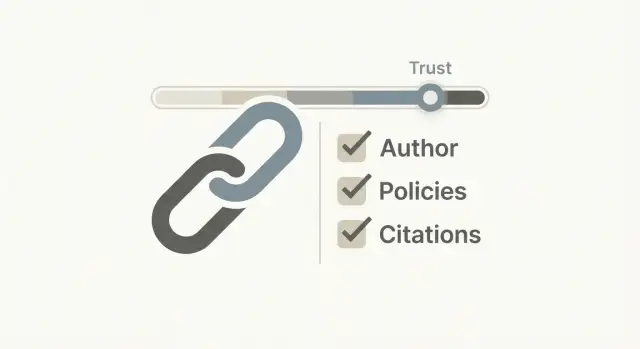
Backlinks and E-E-A-T can support credibility, but they cannot replace on-site proof like author bios, clear policies, and solid citations.
Why backlinks feel like the answer (and why they aren’t)
Backlinks feel like the cleanest fix because they’re external. If a respected site points to you, it reads like instant trust. Sometimes it is.
That belief usually shows up when the symptoms are frustrating but unclear: rankings won’t lift, traffic lands and leaves, and leads don’t convert. It’s easy to assume the missing piece is “authority” and that more links will solve it.
The catch is simple: backlinks and E-E-A-T overlap, but they’re not the same thing. A backlink is a signal that someone noticed you. It doesn’t prove your content is accurate, that a real expert wrote it, or that your site is safe to buy from. Readers and search engines still look for on-page proof.
A useful mental model: links can open the door, but they can’t furnish the room.
When it’s probably not a link problem
If you’ve been building links but the site still feels untrusted, look for patterns like these:
- Visitors bounce quickly from key pages (pricing, service pages, “money” articles).
- People read but don’t take the next step (no sign-ups, no contact, no purchases).
- Content makes big claims without sources or dates.
- Pages have no clear author, credentials, or editorial standards.
- The business is hard to verify (unclear contact details, missing policies).
If several of these are true, more backlinks can amplify a weak experience. You may get more visitors, but they still won’t believe you.
How to spot an on-page trust gap quickly
Do a quick test: ask someone who doesn’t know your brand to land on a top page and answer two questions in 10 seconds:
- Who wrote this?
- Why should I trust it?
If they hesitate, the problem is on-page.
E-E-A-T in plain language
E-E-A-T is a way to think about why a page deserves trust. It’s not one score, and it’s not something you “unlock” with a single tactic. It’s the sum of many small signs.
- Experience: Has the writer actually done the thing?
- Expertise: Do they understand the topic and explain it clearly without mistakes?
- Authoritativeness: Do credible people or sites treat you as a known source?
- Trust: Does the information feel honest, safe, and consistent with what a careful person would expect?
Some signals live on the page (clear author name, sources, dates, contact info). Others are off the page (reputation, mentions, and backlinks). But none of them work alone. A strong signal can help, but it can’t hide missing basics.
For higher-risk topics like health, finance, legal, and safety, the bar is higher. Vague claims, anonymous authors, and missing policies stand out fast.
A helpful distinction is known vs verifiable. You can be known because other sites mention you. You’re verifiable when someone can quickly confirm who wrote the content, why they’re qualified, where the facts came from, and how you handle mistakes. The strongest sites show both.
Where backlinks can support credibility
Backlinks can support trust because they act like public references. When an established site points to you in a relevant context, it suggests you’re worth checking out.
Quality links help in two practical ways:
- Visibility: better discovery and stronger chances to rank.
- Reputation effects: real readers see your brand in places they already trust, then search for you later, subscribe, or share.
Brand mentions vs ranking impact (what to expect)
Not every link leads to an obvious ranking jump. Often the bigger value is the brand effect: your name appears where your audience already spends time. That can lead to more branded searches and more direct visits over time.
Ranking impact tends to be strongest when the link is relevant and used as a real reference, not dropped into a random list.
Why relevance and “established” sites matter
Search engines try to judge whether a recommendation makes sense. A link from an established site that fits your topic is more believable than a link from something unrelated that links to everything.
In practice, supportive backlinks usually share a few traits: they’re from sites people in your space recognize, placed in editorial content where the link helps the reader, and they point to a page that’s genuinely useful.
When your on-site basics are solid, strong backlinks act like confirmation. A cybersecurity consultant with detailed service pages, a real author bio, and case studies looks far more credible if a known tech publication references their research.
What backlinks can’t fix
Backlinks can help people (and crawlers) discover you. They can also add a layer of credibility. But they can’t replace on-page trust.
Here’s what links won’t solve:
- Anonymous or unaccountable content. If there’s no author, no bio, and no clear organization behind the advice, readers have no reason to trust it.
- Thin pages. If the page barely answers the query, repeats generic tips, or avoids specifics, links might get attention, but users still leave.
- Big claims with no sourcing. Especially in health, money, legal, and safety topics, citations and context matter more than authority signals.
- A site that feels unsafe or annoying. Slow pages, intrusive popups, broken layouts, and poor mobile usability raise trust alarms that links can’t override.
If you want a simple gut check: if a respected publication sent you a wave of qualified visitors tomorrow, would those visitors feel confident buying, booking, or sharing your page? If not, fix the page before you promote it.
On-site evidence that builds trust fast
You don’t need a full redesign to improve trust. You need clear accountability and proof.
Make it obvious who is behind the content
Start with author bios. Use a real name, a clear role, and a short reason the person is qualified. “Writer” is vague. “CPA with 8 years of small business tax experience” is specific.
Your About page should answer three questions without fluff:
- Who are you?
- What do you do?
- Why should anyone trust you?
Contact details matter, too. A real business email and a support option people recognize reduce the “ghost site” feeling.
Show how you handle accuracy and incentives
An editorial policy is one of the fastest trust wins for advice content. Keep it practical: how topics are chosen, who reviews facts, how updates work, and how corrections are handled.
Also be clear about incentives. If you run ads or use affiliate links, label them in plain language and separate them from editorial content.
Citations and sources: small details that matter
Backlinks can help people find you. Citations help people believe you.
Add a citation any time a careful reader might ask, “Says who?” That includes stats, rankings, health guidance, financial or legal claims, pricing comparisons, and safety statements.
Good sources are the ones a skeptical person would still respect: primary research, official data, standards bodies, regulators, and manufacturer documentation. Weak sources tend to be undated, anonymous, opinion-heavy, or built to sell.
Keep citations readable. Put the source next to the claim it supports, and include what it is plus the year. For time-sensitive topics, add a meaningful “last reviewed” date and revisit key claims on a schedule.
Step-by-step: combine on-page trust with backlinks
Treat links like a megaphone, not makeup. They amplify a page that already looks credible.
1) Choose a page that deserves attention
Start with a page that can realistically be the best answer for its query. If it’s a placeholder, links just send more people to something disappointing.
2) Add trust basics before you promote
Before you point any authority at the page, make sure a new visitor can quickly see who stands behind it: author, About info, contact options, and the policies that matter for your business.
3) Upgrade the content to match search intent
Write for the reader’s goal. “How to” needs steps. “Best” needs criteria and trade-offs. “Is it safe?” needs risks and limits. Practical examples beat long opinions.
4) Support claims with sources and freshness signals
Add citations for factual claims. Remove vague lines like “experts agree” unless you can name the source. If you update a key number, update the source and the date.
5) Build links after the page is credible
Now links can do their job: discovery, reinforcement, and qualified traffic. Point strong links to the specific page you improved, not automatically to the homepage.
6) Review results and fix weak spots across the site
After links go live, watch what visitors do: time on page, scroll depth, conversions, and where people drop off. If one page improves but others feel thin, do a quick site-wide pass for consistency.
Common mistakes and traps to avoid
Many “link problems” are really page trust problems.
- Buying links before fixing thin or unclear content.
- Pointing links at the homepage when a specific page makes the claim.
- Using generic author bios that don’t match the topic.
- Citing weak or outdated sources.
- Skipping basic policies on sites that collect data, take payments, or publish reviews.
If you’re paying for attention, make sure it lands on proof.
Quick checklist before you build more links
Before you spend money or time on backlinks, make sure the target page stands on its own.
- Clear author info (name, role, qualifications, and a meaningful review date).
- Easy-to-find About and Contact information.
- A simple editorial policy (how you write, review, update, and correct).
- Citations for claims that could influence decisions.
- A page worth endorsing: specific, current, and genuinely helpful.
Then look for trust breakers that can undo any benefit: broken layouts, clickbait titles that don’t deliver, missing authors on half your posts, or an About page that reads like generic filler.
Example scenario and practical next steps
A niche service site has decent rankings and even picks up mentions from respected sites. Traffic is up, but conversions are flat and visitors bounce within seconds.
On inspection, the site feels anonymous. Posts have no author. Service pages make big promises with no proof. Policies are missing or hard to find. Stats are shown without sources. Strong links can bring people in, but they don’t answer the buyer’s real question: “Can I trust you with my money, data, or time?”
What to fix first (before building more links)
Start with changes that reduce doubt fast:
- Add real author or founder bios with relevant experience.
- Replace vague superlatives (“best,” “guaranteed”) with specific, checkable statements.
- Add proof: a short case study, screenshots, before/after examples, or client quotes tied to real outcomes.
- Publish the basic policies visitors expect.
- Add citations for numbers and “industry facts.”
What links help with next (and how to pick targets)
Don’t send new links to a thin homepage that only lists services. Send authority to a page that demonstrates expertise: a detailed case study, a “how we work” page, or a guide that shows your process and sources.
If you want curated placements on authoritative sites without the back-and-forth of outreach, SEOBoosty (seoboosty.com) is one option businesses use to secure premium backlinks. It works best when you point those placements at pages that already have clear authorship, policies, and sourcing.
The goal stays simple: make your site convincing on its own, then use links to amplify that credibility.
FAQ
If I build more backlinks, will my rankings automatically improve?
Backlinks can help people and search engines discover you and can add a layer of credibility, especially when they’re relevant and editorial. But they don’t prove your content is accurate, written by a real expert, or safe to act on. If the page feels thin or anonymous, links often just send more people to bounce.
How do I know if my problem is trust on the page, not backlinks?
If visitors leave fast from pricing, service pages, or key articles, it’s often an on-page trust issue. Other common signs are big claims with no sources, missing author info, and unclear contact or policies. In those cases, more links can amplify a weak first impression instead of fixing it.
What’s the fastest way to spot a trust gap on my site?
Ask someone who doesn’t know your brand to land on a top page and answer two questions in 10 seconds: who wrote this, and why should I trust it? If they hesitate, your page isn’t showing basic accountability fast enough. Fix that before you spend more effort on promotion.
What does E-E-A-T mean in simple terms?
E-E-A-T is a way to think about trust signals: Experience, Expertise, Authoritativeness, and Trust. It’s not a single score you can “unlock,” and it isn’t solved by one tactic like link building. You build it through many small, consistent signs on and off the page.
What on-page changes build trust the quickest?
Start by making authorship obvious: real names, relevant credentials, and a clear role. Add an About page that explains who you are and why you’re qualified, plus easy-to-find contact details. These basics reduce the “ghost site” feeling that makes people leave even if you rank.
What kind of backlinks actually support credibility?
A link is strongest when it’s from an established site in your topic area and placed where it helps the reader. Random, unrelated links tend to look less believable and often have less impact. Relevance and context usually matter more than sheer link count.
Why don’t I see a ranking jump after getting a backlink?
Not always, because many links don’t create an immediate, obvious jump. A common payoff is the brand effect: people see your name in places they already trust, then search for you later or return directly. That can increase branded searches and conversions over time.
What should I cite, and what counts as a “good” source?
Don’t rely on generic blogs, undated posts, or opinion-only pages as proof. Use sources a skeptical reader would respect, like primary research, official data, regulators, standards bodies, and manufacturer documentation. Place the source next to the claim and include the year so it’s easy to verify.
Should backlinks point to my homepage or a specific page?
In many cases, no. If the page itself is thin or makes unproven promises, sending link authority there can waste the opportunity. A better default is to point strong links to the specific page that demonstrates expertise, like a detailed guide, case study, or “how we work” explanation.
What’s the right order: improve content first or build links first?
Fix the page first, then build links. Choose a page that can genuinely be the best answer, add author info, policies, and citations, and make the content match the search intent. After that, links act like a megaphone that amplifies a credible page instead of trying to cover up missing basics.
Share