Backlinks for product launches: a practical 30-day plan
Backlinks for product launches can drive fast visibility. Follow this 30-day plan to prep assets, win launch coverage, and keep momentum after launch.
Why launches lose momentum without a link plan
Launch buzz usually peaks in the first few days, then drops. People move on, algorithms stop pushing your posts, and ads stop the moment you stop paying. If you don’t turn that short spike into something that lasts, you’re renting visibility for a week.
Backlinks are what stick. A social mention disappears in a feed. An ad ends. A backlink can send real traffic and SEO signals for months, especially when it points to a page that stays useful after launch.
The goal with backlinks for product launches isn’t “going viral.” A solid 30-day outcome is simpler: a handful of relevant sites linking to one main page, plus a few supporting links to deeper assets (demo, docs, comparison). That’s how you get compounding traffic instead of a one-time spike.
The most common momentum killer is scattered linking. One podcast links to your homepage, a newsletter uses a tracking URL, a writer links to a temporary announcement page, and a few forget to link at all. You get attention, but no single page benefits.
Pick one primary page before you pitch anyone. Choose the page you’d want ranking three months from now. For most launches, that’s a stable Product or Launch page with clear messaging, proof, and one simple next step.
A quick sanity check for your primary page:
- It will still exist in 6 to 12 months (no expiring promos)
- It explains the product in under 30 seconds
- It has one clear action (join, buy, request access)
- It’s easy to quote and reference
If a small SaaS launches a new feature, the announcement post can support the launch, but long-term links should point to the feature page that stays updated.
Pre-launch assets that make sites want to link
Before you ask for coverage, decide what a reader should click. The best target is usually one page that will still make sense months later.
- If the product isn’t live yet, a waitlist page works, but keep it stable and specific.
- If you’re close to launch, use a launch page that won’t be replaced the next day.
- A homepage can work if it explains the product in one screen and has a clear next step.
Write one plain-language explanation you can reuse everywhere: what it is, who it’s for, and what problem it removes. If someone skims it in 10 seconds, they should still get it.
Then add proof. Sites link more easily when they can cite something concrete, even if it’s small. Aim for a few proof points (one measurable result, one short quote, one benchmark like time saved), a tiny media kit (a couple screenshots, logo, and a short founder bio), and a few specific story angles so different outlets can cover you without repeating the same post.
Example: if you’re launching an AI meeting note app, one angle can be privacy-first, another can be “how sales teams stop losing action items,” and a third can be a small beta summary about time saved.
Build your coverage target list (without overreaching)
A good target list keeps backlinks for product launches from turning into random emails. The goal isn’t to get featured everywhere. It’s to show up where your buyers already pay attention.
Start with 2 to 3 audience segments, then write the phrases they’d search when they need what you sell.
Example: if you’re launching a simple analytics tool, your segments might be founders, growth marketers, and agencies. Their search phrases might include “simple dashboard for clients,” “GA4 alternative,” or “weekly KPI report template.” Those phrases help you spot the right sites and the right angle.
Build a list of 30 to 60 realistic targets and bucket them so you don’t pitch the wrong story to the wrong place:
- Top-tier publications (harder to land, strong credibility)
- Niche blogs and newsletters (often faster, often include direct links)
- Partners and integrations (co-marketing pages, marketplaces, “preferred tools” lists)
- Communities and resource pages (some allow links, some don’t)
Before you add any site, check what they tend to link to. Some cite how-to guides, some only link to original data, some care about founder stories. That tells you what asset to offer.
Keep everything in one simple sheet so follow-ups don’t get messy. Track the site, the contact, the angle you’re pitching, the best linkable asset to send, and whether it’s pre-launch, launch week, or post-launch.
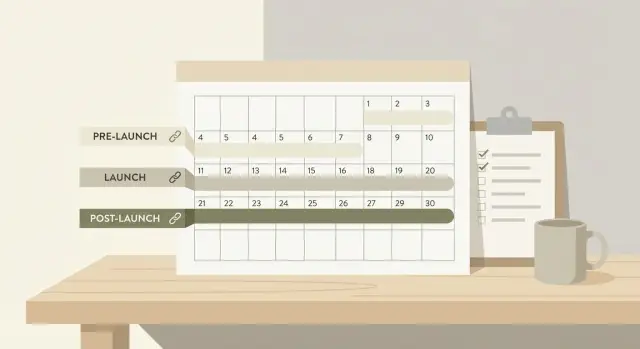
The 30-day plan at a glance (week by week)
A launch has a lot of moving parts. A week-by-week plan keeps link work from getting pushed “until later,” when the buzz is already gone.
Week 1 (days 1 to 7): Prep what people will link to
Make linking easy. Finalize your core pages (launch or product page, pricing or FAQ), a small media kit (logo, screenshots, founder bio), and a few proof assets (quotes, benchmarks, a short demo). Build a realistic target list and write one outreach note you can quickly personalize.
Week 2 (days 8 to 14): Start outreach and get soft yeses
Reach out in small batches and track replies. You’re looking for confirmations like “send me details on launch day” or “we can include you.” Capture their preferred format and deadline.
Week 3 (days 15 to 21): Launch week follow-ups and live tracking
Follow up fast, send the final headline and assets, and monitor mentions as they go live. Track who posted, what they wrote, and whether there’s a clickable link to the right page.
Week 4 (days 22 to 30): Convert mentions, strengthen pages
Now turn attention into lasting SEO value. Request link fixes where needed, consolidate links to the best-fit page, and refresh your top pages based on the questions that came up during launch.
To keep it from taking over the launch, set a daily time box:
- 30 minutes: replies and follow-ups
- 20 minutes: tracker updates and link checks
- 10 minutes: queue tomorrow’s outreach
Outreach steps for days 1 to 14
Days 1 to 14 are about getting the right people interested before everyone is flooded with launch-day noise. Line up a few writers and site owners who already understand what you’re releasing, and make it easy for them to link to the right page.
Keep your pitch short (4 to 6 sentences): who it helps, what’s new, why it matters now, and one proof point (a number, a waitlist size, a before/after result). Then add one specific story angle. “We launched a new product” isn’t a story. “We built X because Y group keeps losing money/time to Z” is.
A practical outreach flow:
- Pick 20 to 40 targets that match your audience.
- Send a tailored email with one angle and one clear takeaway.
- Offer a pre-brief under embargo if they plan ahead.
- Include a one-line ask for a backlink to the exact page you want indexed.
- Keep it light: no heavy attachments, no decks.
Follow-ups should be polite and limited:
- 48 hours later: quick nudge with one extra detail.
- 5 to 7 days later: a new angle or a small update (quote, stat, screenshot).
- Day 14: close the loop and move on.
Example: if you’re launching a simple invoicing tool for freelancers, pitch finance bloggers on “late payments are up; here’s what cut reminders in half,” and pitch product sites on “we removed three common setup steps.”
Launch week coverage targets (days 15 to 21)
Launch week is where backlinks for product launches either happen fast or fade out. Set realistic coverage goals so you know what “enough” looks like.
Using tiers keeps you focused:
- Tier 1: 1 top publication
- Tier 2: 5 mid-sized sites, newsletters, or communities
- Tier 3: 15 smaller but highly relevant blogs, partners, and directories
When choosing targets, favor places that do two things: they rank for terms your buyers search, and they can include a clean link in the main body. A smaller site with real readers often beats a big site that only offers an unlinked mention.
Coordinate partner posts and integration announcements during days 15 to 21. Agree on one publish window and one source of truth (one launch page, one product name, one tagline). Consistency makes it easier for editors and avoids scattered mentions that never become links.
Decide upfront what you’ll share publicly: a short demo video, pricing (or at least a starting point), and availability. If pricing is “contact us,” expect more questions and slower coverage.
Treat your inbox like a launch tool:
- Check twice per day at set times
- Reply quickly to time-sensitive requests
- Use one short template for “assets + the link to use”
- Track who asked for what in one sheet
- Send same-day thank-yous when coverage goes live
Turn launch mentions into clean backlinks
A mention is nice, but the backlink is what keeps working after launch week. Set aside time each day to check new coverage and confirm it actually links to you.
If you get a mention with no link, reply while the launch is still fresh in their inbox. Keep it simple: thank them, point out the missing link, and make it easy to fix.
Subject: Quick fix for the launch mention

Hi [Name], thanks for including [Product] in your piece.

Could you add a link to [preferred page] where you mention us? It helps readers find the details quickly.

If you’d like, the best anchor is just “{Product}” or “{Company}”.
Thanks again,
[Your name]
Where should the link point? Pick one target before launch week and stick to it. Changing targets mid-week creates messy tracking and splits attention. For most launches, choose either your homepage (if you’re building brand searches) or one stable launch page (if you want signups). Don’t point to a page that might move, change, or disappear.
Common fixes worth requesting:
- Wrong URL or a typo
- Homepage link when you need the launch page (ask once, politely)
- Redirect or tracking link (ask for a clean, direct link)
Keep a simple log: outlet, author, date, live URL, link status, target page, and follow-up date.
Post-launch consolidation (days 22 to 30)
The week after launch is where teams quietly lose the value they just earned. People are still curious, writers are still catching up, and your data is finally real.
Update your main launch page so it becomes the best page to cite. Add a short “what happened” section near the top: key numbers (signups, waitlist size, revenue, beta users), one or two strong quotes, and a tight FAQ that answers the questions journalists and buyers keep asking.
Publish a short recap post for your own audience (email, community, customers). Keep it simple: what shipped, what changed after launch week, and what’s next. Smaller blogs often prefer linking to recaps because they’re easy to summarize.
Then support the page you want links pointing at with three helper pages that reduce hesitation and keep visitors moving: a comparison page for the top alternatives, a use case page with one real scenario, and a pricing or onboarding FAQ.
Keep the pipeline warm. Follow up with any site that agreed to cover you but hasn’t posted yet. Send one short message with a fresh stat, a new quote, and a suggested sentence they can use.
If you want a more predictable baseline while you keep doing editorial outreach, SEOBoosty (seoboosty.com) is one option for subscribing to curated backlink placements from authoritative sites. It works best when all placements point to the same primary page and your launch assets already deserve the citation.
Common mistakes that waste early momentum
The first week after you announce is when people are most curious. If your links are messy or your asks are vague, that curiosity fades fast.
One trap is aiming only for huge sites without a clear reason they should cover you. Big publications need a tight angle: original data, a strong story, or a category shift. “We launched” is rarely enough.
Another easy loss is sending different people to different pages. If one writer links to your homepage, another to pricing, and another to a signup form, you spread the value thin and make it harder for search engines (and humans) to understand what the launch is about.
Fix the basics before you email anyone
Make sure your launch has one obvious, linkable home. It should explain what the product is, who it’s for, and what changed with this release. Add at least one proof point and one clear way to try it.
Over-following up is another momentum killer. If someone ignores you, five nudges in a week won’t change their mind, but it can burn the relationship for later updates.
Don’t ignore small niche sites. They often link more often, publish faster, and reach the exact people who care. If you get a quick mention in a small industry newsletter, ask for the launch page link, then use that linked mention as proof when pitching larger outlets.
Quick checklist before you hit launch
If you only do one thing before launch, make sure you have a single page that deserves the link. Sending people to five different URLs is the fastest way to waste attention.
Pick one primary link target page (usually your launch page or homepage) and test it like a visitor would. Check load speed, mobile view, and that the page explains the product in the first 10 seconds. If tracking is part of your setup, confirm analytics and conversions fire before anyone clicks.
Build a media kit that removes friction for busy writers: a clean logo, 2 to 4 screenshots that show the product in action, and a 50 to 100 word description they can paste. Add a one-line “what’s new” note.
Make sure your target list is segmented and realistic. Group contacts by fit (news, niche blogs, communities, partners) and set a small, reachable goal for each group.
Final pre-launch checklist:
- One primary link target page is live, fast, and tested on mobile
- Media kit is ready: logo, screenshots, 50 to 100 word description
- Target list is split into 3 to 4 segments with realistic goals
- Pitch is 5 sentences or less with one clear ask (link to your chosen page)
- Daily tracking is set: mentions found, links confirmed, replies pending
Example: a realistic 30-day launch link plan
Imagine you’re launching a new scheduling app for clinics. The product is simple (online booking, reminders, fewer no-shows), but buyers are cautious, so trust signals matter.
Days 1 to 14: pre-launch assets (make linking easy)
Create two pieces that are genuinely useful to clinic owners and healthcare ops teams. Keep them short and specific so writers can cite them.
- A small data point: a one-page summary from a survey (even 25 to 50 clinics) on why appointments get missed
- A how-to guide: “How clinics can cut no-shows in 30 days” with a simple checklist and sample reminder schedule
Add a lightweight press kit: a few screenshots, a two-sentence product description, and a founder bio.
Days 15 to 21: launch week coverage targets
Aim for one bigger mention (a known healthcare tech or SMB tech outlet), several niche write-ups (clinic management blogs, local healthcare business sites), and one partner post (for example, an EHR consultant or a training provider that serves clinics).
Days 22 to 30: consolidate and clean up
Track every mention. If three sites mention the launch but don’t link, send a short note asking for a clickable source. Provide the exact page to reference and a suggested sentence.
By day 30, success looks like referral traffic that doesn’t drop to zero after launch week, a steady rise in brand-name impressions, and a handful of relevant pages linking to your most useful asset (for example, the no-shows guide).
Next steps after day 30
Momentum doesn’t end when launch chatter fades. Turn what worked into a repeatable routine so your launch page and core product pages keep earning links and rankings.
Review every backlink and mention you earned and look for patterns: which angle made people care (data, story, customer proof), which asset got cited (landing page, demo, benchmark), and which tier delivered the best results. Often, smaller industry sites send fewer clicks but produce the most natural, lasting links.
Keep it sustainable by choosing one primary activity and one supporting activity each month. For example: a small batch of targeted pitches to the site tiers that worked, one partner co-marketing swap, one refresh of a linkable asset (updated stats, new screenshots, added FAQs), and a quick mention-to-backlink sweep with polite requests.
Build a backlog of linkable assets so the next release doesn’t start from zero: a mini case study, a comparison page, a short report with numbers, a checklist, and a safe-to-share product update.
FAQ
Why does launch momentum usually disappear after a few days?
Plan for the buzz drop-off. Social posts and ads fade fast, but a few solid backlinks to a stable page can keep sending qualified traffic and SEO signals long after launch week.
What should I choose as my main link target during a launch?
Pick one primary page you want ranking in 3 months and make it the default link for most coverage. Use supporting links only when they clearly match the context, like docs for technical write-ups or a comparison page for “alternatives” articles.
Should launch backlinks point to my homepage or a launch page?
A homepage works if it explains the product instantly and has one obvious next step. If your homepage is broad or changes often, a dedicated product or launch page is usually better because it stays focused and easy to reference.
Do I really need to avoid tracking URLs in outreach and coverage?
Use a clean, direct URL to the page you want indexed and cited. Tracking links can confuse editors, break over time, and sometimes get removed, so keep tracking on your side (analytics) instead of in the link you ask for.
What pre-launch assets make other sites more likely to link to me?
Create something that is easy to cite: a clear description, a concrete proof point, and a small media kit with a logo, a few screenshots, and a short founder bio. Editors link more when they can quickly verify what you do and quote a specific detail.
How do I build a target list without wasting time on unrealistic outlets?
Start with your audience segments, then find sites where those people already learn and buy. A realistic list of 30 to 60 targets beats a huge list you can’t personalize or follow up on properly.
What should a good launch outreach email include?
Keep it to 4 to 6 sentences: who it’s for, what’s new, why it matters now, one proof point, and one clear ask for a link to your chosen page. Make each email about one angle so the recipient instantly understands the story.
How many follow-ups is too many during a launch?
Follow up once after about 48 hours, then again 5 to 7 days later with a genuinely new detail like a stat, quote, or updated screenshot. If there’s no response by around day 14, close the loop and move on to protect the relationship.
How do I turn an unlinked mention into a real backlink?
Reply quickly while the mention is still fresh, thank them, and ask for a clickable link to your preferred page where you’re referenced. Keep it simple and specific so the fix takes them less than a minute.
Is it worth using a paid backlink service during a product launch?
Editorial outreach is worth doing, but it’s unpredictable, so some teams add a paid baseline of placements to reduce uncertainty. If you use a service like SEOBoosty, it works best when you already have a strong primary page and you keep placements consistent to that one URL.
Share