Backlinks for Programmatic SEO Pages: What to Link First
Backlinks for programmatic SEO pages: a simple framework to pick templates, collections, and facets that deserve links without diluting authority.
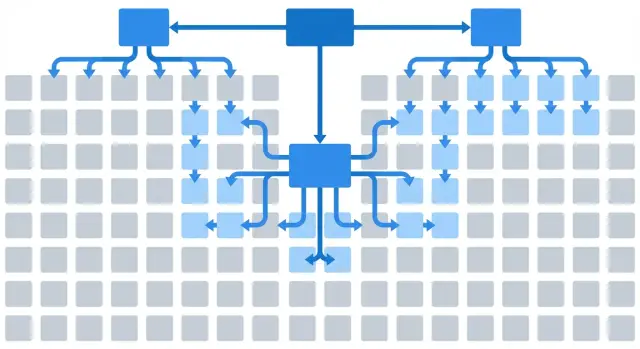
Why programmatic pages are hard to build links to
Programmatic pages often come in the thousands: same layout, same blocks, slightly different city, product, or filter. To a human reader, many of those pages feel interchangeable. That’s why they rarely earn links on their own, even if the content is technically unique.
People link to pages that give them something to reference: a clear story, a point of view, original data, or a useful tool. Blog posts and guides are built for that kind of citation. A programmatic template is built for coverage. Coverage helps search engines understand breadth, but it doesn’t automatically create something a writer wants to cite.
There’s also a math problem. When you spread backlinks across too many URLs, each page gets a tiny share of authority. You end up with hundreds of pages that are all almost strong, which usually means none of them really moves.
A few friction points show up again and again:
- Similar pages compete with each other, so links don’t create a clear winner.
- Facets and filters create near-duplicates that are hard to justify as a citation.
- The best page to link to is unclear (city page, category page, filter page?).
- External sites prefer linking to a single, stable hub, not a shifting set of URLs.
The goal with backlinks on programmatic sites usually isn’t to power up one URL. It’s to lift a whole cluster: a template type, a category, or a region, so internal links and navigation can carry the value through the rest of the site.
That’s also why programmatic SEO link building feels different from blog link building. With a blog, you pick the one post with the strongest angle. With programmatic pages, you pick a small set of pages that can act as authority anchors for thousands of related URLs, without leaking strength into pages that shouldn’t rank.
Inventory your page types (templates, collections, facets)
Before you decide which pages to build backlinks to, get clear on what kinds of pages you actually publish. Programmatic sites can look like one website, but search engines see thousands of URLs with different jobs.
Start by naming your main page types in plain language:
Template pages are repeatable layouts that generate many URLs (for example: "{service} in {city}"). Collection pages group items by a shared theme (for example: "Best plumbers in Austin"). Facet pages are filter combinations created by navigation (for example: "Austin plumbers + 24/7 + under $150"). Detail pages are the individual item pages (a single listing, product, or profile).
Now inventory each type. Don’t try to list everything. Pull 5 to 10 real URLs per type and look at them side by side. You’re checking patterns, not chasing perfection.
For each example URL, capture a few notes:
- What’s the goal of this page (purchase, lead, sign-up, or discovery)?
- Does it target a clear query, or is it just nice to have?
- Is the content unique enough, or mostly repeated blocks?
- Does it link out to many related pages (a hub), or is it an endpoint?
- Does it already get impressions or clicks, even if rankings are low?
A quick scenario: a local services directory might earn revenue on detail pages (each business listing converts), while collections act as hubs (they send visitors to many listings). Facets help discovery but can easily explode into thin pages.
By the end of this inventory, you should be able to point to the few page types that (1) earn money, (2) guide users to lots of other pages, and (3) are stable enough that you won’t need to rebuild them after you start building links.
Set goals and guardrails before you choose link targets
Before you earn or buy a single backlink, decide what winning looks like. Backlinks work best when they support a clear outcome, not when they’re scattered across hundreds of URLs.
Start by choosing your main path:
- Head-term rankings (a few big pages that can win competitive queries)
- Long-tail growth (many mid-volume pages that add up)
- A mix (head terms first, then expand)
Next, set guardrails so you don’t dilute authority. A simple rule beats a perfect one. For example, cap yourself at a small number of external link targets per quarter (often 5 to 20, depending on site size), and put everything else on an internal linking plan.
Then decide what must be true before a page can earn a backlink. If a URL isn’t ready for Google, it isn’t ready for links. At minimum:
- It’s indexable (not blocked by robots, no noindex).
- It has stable URL rules (no endless parameters or duplicates).
- It has enough unique value to deserve a ranking.
- It’s connected internally from relevant hubs.
Finally, agree on how you’ll measure lift across the whole cluster, not just the target page. One backlink to a strong collection page should raise nearby pages too.
Measurement usually includes a before-and-after view of:
- Rankings for the target keyword set
- Organic clicks and impressions across the template or collection
- Number of indexed pages in that cluster
- Internal link flow (are important pages receiving links from hubs?)
If you’re using a provider like SEOBoosty to place premium backlinks, these guardrails matter even more. Each placement is valuable, so it should move a group of pages, not just a single URL.
A step-by-step scoring framework to choose winners
When you have thousands of URLs, the goal isn’t to support everything. It’s to pick a small set of pages that can rank, earn trust, and then share that lift with the rest through internal links.
Use this scoring flow each time you add a new template or expand filters:
- Remove weak candidates first. If a page has thin text, duplicate titles, no real choices, or unclear intent (who it’s for and what happens next), it’s not ready for backlinks. Fix it or skip it.
- Group URLs by template and intent. Don’t score 5,000 URLs one by one. Score page types (template + query pattern), like "City + Service" or "Category + Brand," and treat each group as one cluster.
- Score the cluster on three signals. Give each a simple 1 to 5 rating for:
- Demand: Are people actually searching for it?
- Uniqueness: Does it offer something better than generic results?
- Value: If it ranks, will it lead to signups, leads, or revenue?
- Check link-sharing potential. A winner should be able to pass value to many other pages through clear internal links (to subcategories, top filters, popular items, nearby cities, and so on). If it’s a dead end, it’s a weaker target.
- Pick a few winners and document why. Choose a small set (often 3 to 10 clusters). Write one sentence for each: what it targets, who it helps, and how it will spread authority internally.
Example: you run a directory with "plumbers in {city}" pages and filters for "emergency," "24/7," and "drain cleaning." The broad "plumbers in Austin" cluster may score high on demand, but the "emergency plumber in Austin" cluster might score higher on value and intent. If that emergency page also links to the main city page and top neighborhoods, it can push rankings across the whole Austin set.
If you buy placements (for example, through a curated inventory like SEOBoosty), this framework keeps targets specific, ready, and built to lift hundreds of related URLs.
Which page types usually deserve backlinks first
On a programmatic site, one good link can help thousands of URLs, but only if it lands on a page that can pass value through internal links. Early targets usually represent a whole group, not a single item.
A simple order that works for many sites:
- A template root page that explains the pattern and links to the best examples (think: "All {service} providers," not "Provider #1842")
- The biggest collections that match real, broad searches (top cities, top categories, common use cases)
- Evergreen support content that earns links on its own (definitions, comparisons, "how to choose" guides)
- A small number of standout detail pages, but only when they’re truly link-worthy
Template roots are often the best starting point because they give you a clean place to summarize what the site offers, add trust signals, and point to your strongest clusters. A couple of solid links into a strong template root can help your internal links carry that lift into collections and, selectively, into the facets you actually want indexed.
Next, pick collections that people actually search for. A "Top companies in {country}" page usually beats a niche tag or a tiny filter combo, even if the niche one feels more specific.
Evergreen supporting pages help when programmatic pages are useful but not something people cite. A guide like "What is managed IT support?" can earn links, then pass authority into your collections through clear internal linking.
Detail pages are rare link targets, but they can work when a page has something distinct: original data, a mini-study, a free tool, or a widely referenced entity. Even if you’re using SEOBoosty, it’s usually smarter to pick pages that distribute value rather than pages that end the user journey.
Facets: when to link to them and when to avoid them
Facet pages (filters like brand, price, size, location) can be your biggest multiplier or your biggest mess. The default rule is simple: only build backlinks to URLs you’re confident you want indexed for the long term.
A facet deserves to be indexable when it behaves like a real category with steady demand. If people search for it directly, the page has enough inventory to feel complete, and the title can be clear without keyword stuffing, it can be a strong candidate. If the filter produces thin results, changes constantly, or mostly repeats other pages, keep it blocked (noindex) or canonicalized to the closest parent page.
How to decide if a facet should be indexable
Before you point a backlink at a facet, run a quick sanity check:
- It answers a stable intent (not a one-off combination like "under $37, 4-star, red, in-stock").
- It has enough inventory to stay useful (and not drop to a handful of items).
- It’s meaningfully different from the unfiltered collection (not just a re-sort).
- The topic makes sense to reference.
- It won’t be noindexed or canonicalized later.
If you’re unsure about the last point, pause. One of the fastest ways to waste authority is to build links to URLs you later decide to noindex or canonicalize. This is also why teams that buy placements through a provider like SEOBoosty should lock indexing rules first, then place links.
Pick 1-2 hero facet combinations
Most sites don’t need 50 indexable filter combinations. Pick 1 to 2 per major collection that behave like real subcategories (for example, "City + Service" or "Category + Brand"). Treat them like category pages: consistent copy, stable internal links, and a clear canonical.
When facets create near-duplicates, keep one version as the winner and consolidate the rest with canonicals and consistent internal linking. This keeps backlinks focused while still letting users filter freely.
Internal linking that turns a few backlinks into broad lift
Backlinks are expensive attention. On a programmatic site, the real win isn’t just the page you point to. It’s the pages that page can safely push authority to.
Start by choosing a small set of linked hubs. These are pages that naturally deserve links and can funnel visitors deeper: a core collection, a top category, or a "best of" roundup that matches real search intent. From each hub, build clear paths to the next layer of priority collections and then to detail pages.
Anchor text matters, but it doesn’t need to be clever. Use simple wording that matches intent. If the destination is a "Boston plumbers" collection, the link can say "Boston plumbers" or "plumbers in Boston," not "click here" or vague "services."
Repeatable link modules make internal linking easier to scale without creating chaos. A few template-safe blocks can do most of the work:
- "Top locations" or "Popular categories" on category templates
- "Related collections" on collection pages
- "Nearby" or "Similar options" on detail pages
- A short breadcrumb trail that mirrors your hierarchy
- A "Browse by [key attribute]" block only for attributes you actually want indexed
Keep an eye on orphan pages (no internal links pointing to them) and pages that sit too many clicks from the homepage. If a page is 5 to 7 clicks deep, it often won’t get crawled or valued the way you expect.
A quick example: you secure a few external links by pointing to three city hubs and two top service collections. Make sure those five pages each link to a curated set of sub-collections, and those sub-collections link to the best detail pages. That’s how a handful of links can lift thousands of URLs instead of feeding one page.
If you’re using a service like SEOBoosty to place high-authority backlinks, this internal setup is what turns placements into site-wide gains.
How to plan backlink placement without spreading authority thin
When you have thousands of URLs, the fastest way to waste effort is to sprinkle backlinks everywhere. Treat backlinks like a budget: concentrate first, then widen.
Start by picking 3 to 5 topics you actually want to own in search. For each topic, choose one clear hub page (often a category, a top collection, or a "best of" page) that can pass value down to many long-tail pages through internal links. If you can’t explain why a hub exists in one sentence, it isn’t a hub yet.
Match the link source to the page intent. A reference-style source (definitions, comparisons, data) fits best with pages that help people learn. A commercial page (pricing, product sign-up, "hire us") often looks out of place there. If the source reads like learn, point to a page that supports learning. If it reads like buy, point to a page that helps people choose.
Decide what enough looks like before you start. It’s common to see better results from 2 to 4 strong links into one hub than from 10 weaker links spread across 10 hubs.
A simple planning approach:
- Choose 3 to 5 hubs total for this cycle.
- Set a per-hub target (for example, three quality placements).
- Hold the line: no new hubs until targets are met.
- Re-check rankings and internal link flow, then expand.
Cadence matters. Work in short cycles: concentrate authority for a few weeks, measure movement, then add the next topic. Example: a directory with filters could first earn links to "Top vendors in Austin," then expand into "Top vendors in Dallas" once the first hub starts lifting the city pages beneath it.
If you use a placement service like SEOBoosty, apply the same discipline: subscribe for a small set of hubs, validate lift, then scale to the next cluster instead of spreading placements thin.
Example scenario: choosing targets for a directory with filters
Imagine a directory site that lists home services. It has city pages (Austin, Denver), service pages (plumber, electrician), and filters like "open now," "licensed," and "24-hour." You have thousands of URLs, but you only want to build a small number of backlinks so you don’t dilute authority.
Start by picking pages that (1) describe the category clearly, (2) can rank for big, stable keywords, and (3) naturally link out to many deeper pages.
A simple set of targets for month one:
- Two hub pages: "All Services" and "All Cities" (or "Browse by City"). These become your strongest directory entry points.
- Five collections: choose high-demand combinations with broad intent, like "Plumbers in Austin," "Electricians in Denver," "Roofers in Phoenix," "HVAC in Chicago," "Landscapers in Seattle."
- Zero to two facets: only link to a facet if it represents a real, evergreen category people search for, like "24-hour plumbers in Austin." Skip thin facets like "open now" if listings change hourly and the page looks unstable.
Then make each linked page do extra work with internal links. On the hub pages, feature top cities and top services. On each collection page, add a short block like "Popular nearby areas" (links to nearby cities) and "Related services" (links to sibling services in the same city). This creates a clean flow from hubs to collections to long-tail pages without needing backlinks to every URL.
After publishing and placing links, watch for these signals over the next few weeks:
- Crawling: more frequent crawls of city and service sections, not just the homepage
- Indexing: fewer "Discovered, currently not indexed" programmatic URLs
- Rankings: the five collections move first, then similar pages begin to follow
- Internal lift: long-tail pages start getting impressions even with zero direct backlinks
If you use a provider like SEOBoosty, the same logic applies: buy fewer placements and point them at pages that can pass value to thousands of URLs.
Common mistakes that waste backlinks on programmatic sites
The fastest way to waste backlinks on programmatic pages is to treat them like normal blog posts. With templates, filters, and auto-generated collections, small technical choices can quietly block value from reaching the pages you want to rank.
Common mistakes that hurt the most:
- Pointing links at URLs that later change (slugs, parameters, or redirects)
- Choosing targets only because they have big search volume, even if the page isn’t unique
- Publishing multiple near-identical hub pages that end up competing with each other
- Forgetting internal linking, so authority never reaches deeper pages
- Repeating the same exact-match anchor text across many placements
URL stability comes first. If your template might switch from /city/category to /category/city, or you’re still deciding which filter combos get indexed, don’t build links yet. One canonical change can turn a great placement into a link that no longer supports the page you care about.
Search volume isn’t a good tie-breaker on its own. A high-volume page that looks like 200 other pages (same copy, same intent, same layout) rarely earns a lasting edge. When picking targets, favor pages with clear differentiation: distinct inventory, stronger intent match, or a reason to exist beyond having keywords.
Also watch for self-competition. Many sites create a "Top X in [City]" hub, a "[City] directory" hub, and a "[City] best options" hub, all pointing at the same set of child pages. Google then has to guess which one is the real answer.
Finally, backlinks don’t magically flow. If a linked-to collection page doesn’t link clearly to its best sub-pages, the lift stops there. And if you’re buying placements through a service like SEOBoosty, vary anchors and keep them natural so the pattern doesn’t look forced.
Quick checklist and practical next steps
If you want backlinks to create real lift (instead of tiny wins scattered across thousands of URLs), treat link targets like a short, deliberate sprint.
Fast pre-flight checks (before you choose targets)
Run each candidate page through a few quick checks. If it fails any of these, skip it and pick the next option:
- Is it indexable (not blocked by noindex, canonicalized away, or stuck behind parameters)?
- Does it satisfy a unique intent (not a near-duplicate of another template or facet)?
- Is the URL stable (no frequent slug changes, session IDs, or shifting filter rules)?
- Is the content complete enough to deserve the link (title, intro, key data, FAQs, basic trust signals)?
- Is there a clear internal path from this page to the rest of the cluster (and back)?
Now decide your next five link targets. Keep it simple: pick three to four hub pages that represent the biggest, most valuable clusters (usually top categories or collections), plus one to two support pages that strengthen the same topics (for example, a comparison page or a high-intent city page).
Before any links go live, write down what you’ll update on-page for each target. This avoids sending authority to half-finished pages. At minimum, note the two to three changes you’ll ship first (like improving the intro, adding unique data, and tightening internal links to top child pages).
Practical next steps for this week
- Pull a shortlist of 15 candidates, then cut to five using the checks above.
- Map each of the five to a cluster: which 20 to 200 URLs should benefit through internal linking.
- Make the on-page updates, then lock the URL structure.
- Place links, then track two metrics: ranking movement for the hub and organic clicks across the cluster.
If you need high-authority placements and you already know your hubs, SEOBoosty (seoboosty.com) is designed for this kind of focused approach: choose domains from a curated inventory, place a small number of premium backlinks to stable targets, and let internal linking spread the gains across the programmatic set.
FAQ
Why don’t programmatic pages naturally earn backlinks?
Don’t try to link to everything. Pick a small set of stable hub pages (often template roots or high-demand collections) that can pass value to hundreds or thousands of related URLs through strong internal linking.
Which programmatic page types should get backlinks first?
Start with template root pages and the biggest, most searched collections (top cities, top categories, core use cases). Add supporting evergreen pages when your programmatic pages are useful but not something people typically cite.
How do I pick a “hub” page that will lift a whole cluster?
If you’re choosing between two similar targets, pick the one that acts like a hub. A good hub links clearly to priority sub-collections and important detail pages, so the authority you earn doesn’t stop at one URL.
What’s a simple way to decide which clusters are worth links?
Score clusters, not individual URLs. Rate a template group on demand (people search it), uniqueness (it’s meaningfully different), and value (it drives signups, leads, or revenue), then confirm it can share authority internally.
What should be true before I build a backlink to a programmatic page?
Don’t point backlinks at a URL until it’s ready. Make sure it’s indexable, has a stable canonical, avoids thin or duplicated content patterns, and already links internally to the pages you want to rank next.
Should I build backlinks directly to facet/filter pages?
Only build backlinks to facet URLs you’re confident you want indexed long term. If a filter combo is unstable, thin, or likely to be canonicalized later, keep links focused on the parent collection or a stable subcategory instead.
Is it better to spread backlinks across many pages or focus on a few?
Concentrate first. You’ll often get more movement from a few strong links into one hub than from many weaker links spread across many URLs, because authority isn’t diluted and internal linking can distribute it more effectively.
How do I match backlink sources to the right programmatic targets?
Match the destination to the source’s intent. If the linking page reads like education or reference, send it to a page that teaches or compares; if it’s a decision-focused source, send it to a page that helps choose and converts. This keeps the link feeling natural and improves performance.
How do I measure whether backlinks are helping a programmatic section?
Track lift across the whole cluster, not just the linked URL. Watch rankings for the target keyword set, organic clicks and impressions across related pages, and whether more pages in that section are getting crawled and indexed consistently.
How should I use SEOBoosty (or any backlink provider) for programmatic SEO safely?
If you’re using a placement service like SEOBoosty, set guardrails before you place anything. Choose a small number of hubs, lock URL and indexing rules, update on-page content and internal links first, then place links so each placement supports a cluster instead of a single page.
Share