Diminishing returns of backlinks: when to point at a new URL
Learn the diminishing returns of backlinks and how to spot when your next authority link should support a new URL instead of piling onto one page.
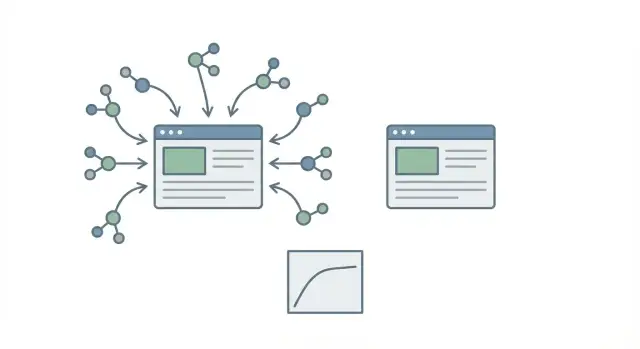
What “diminishing returns” looks like with authority links
It often starts with good intentions. One page becomes the “money page,” so every new authority link gets pointed there. Over time, that URL collects strong links while other useful pages stay invisible, even if they answer different questions and target different searches.
Diminishing returns of backlinks means the next link helps less than the last one did. The first few high-quality links can move a page from “not noticed” to “on the map.” After that, each new link may still help, but the jump gets smaller. Sometimes rankings barely change at all, even as you keep adding stronger links.
The real choice is whether to keep strengthening one URL or spread authority so more pages can rank. Stacking links on one page can make sense if it’s close to a top spot and just needs a final push. But if that page is already strong and stuck, your next link may do more work when it supports a different URL that can actually gain visibility.
There’s no universal “X authority links per page” rule. Competition, search intent, and the page itself matter. What you can rely on is this: if the same page keeps getting links but positions and traffic barely move, you’re paying more for less.
A simple expectation to keep in mind:
- Early links usually create the biggest change. Later links often create smaller changes.
- If one URL is already strong, the next win may come from lifting a second URL.
- Let signals guide you (rank movement, impressions, conversions), not a fixed quota.
If your main page no longer responds, treat your next authority link as a chance to grow a different part of the site instead of polishing the same spot.
How authority links move rankings (simple version)
An authority link is a strong “vote” pointing at a specific page. It can help that page get discovered faster, get crawled more often, and be taken more seriously when search engines decide what to show.
A link passes two things:
- Trust, which comes from the site linking to you and the page the link sits on.
- Context, which comes from the topic of that page and the wording around the link.
Links aren’t magic. Search engines still need the page to match the query and satisfy the searcher. If the page is thin, off-topic, or the wrong format for the keyword, more links might not move it much. That’s where diminishing returns of backlinks often begins: the page has “enough authority,” but it still isn’t the best answer.
It also helps to separate page lift from site lift. A strong link pointed at one URL mainly boosts that URL. Some value can spread through internal links, but it’s weaker and depends on your structure. If you only stack links on one page, you can end up with one winner while other important pages never break through.
Signs the current page is hitting a ceiling
A page can be good enough to earn authority links and still fail to move. That’s usually when diminishing returns shows up: each new link costs the same, but the ranking gain shrinks.
Common ceiling signals:
- You’re stuck below a dominant competitor. You sit at positions 3 to 5, add a strong link, and nothing changes. If the pages above you are the clear “reference” pages, the next link may not be the missing piece.
- A true plateau. Rankings and organic traffic stay flat for 3 to 6 weeks after links land. That often means something else is holding the page back.
- Intent mismatch. You’re pushing a product page for a “how to” query, but results are mostly guides, comparisons, or tools.
- On-page limits. Weak topical coverage, missing sections, and unclear headings reduce how much a link can help.
If you recognize two or more of these, consider pointing the next authority link to a different URL that matches intent better, then internally link back to your main money page.
Common reasons more links stop helping the same URL
When you keep adding authority links to one page and rankings barely move, it’s often not a “links problem” anymore. It’s usually the page, the query, or the results layout.
Three frequent causes:
- Wrong page type for the query. If searchers want a category page, a comparison, or a calculator, a blog post (or a product page) can hit a ceiling even with strong links.
- Coverage gaps. Your page answers the headline question but misses the supporting sections competitors use to show depth.
- The SERP is crowded. Maps, shopping blocks, videos, or AI summaries can push classic results down. Rankings might improve slightly, but traffic doesn’t.
There’s also a trust gap that links alone won’t close. In some spaces, the winners have reputation signals beyond backlinks: known brands, strong reviews, credible authors, and lots of independent mentions.
When you see these patterns, shifting the next link to a different URL (and supporting it with internal links) often creates more total growth than stacking one more link on the same page.
How to choose a new URL to support (without guessing)
When a page stops responding to authority links, your next link should earn you something new: new rankings, new traffic, or better leads.
Start with business impact. If two pages could use help, back the one closest to revenue: demos, quote forms, trials, bookings, or high-intent leads. A post that gets traffic but never converts can wait.
Next, choose by keyword intent, not gut feel. If you keep aiming at the same exact query, you may be stacking links into the same ceiling. Support a URL that targets a different, valuable cluster. For example, instead of pushing harder on “project management software,” support “project management software for agencies” or “project management templates.” Related, but not identical.
Make it easy for the link to work by choosing pages that already:
- Answer the question clearly
- Focus on one main intent
- Have solid basics (title, headings, internal links, readable layout)
- Can convert a visitor with a clear next step
Finally, avoid pages with no demand. If a URL has no meaningful impressions, no rankings anywhere near pages 1 to 3, and no clear keyword it should own, an authority link rarely fixes that. Improve or rebuild the page first, then support it.
Step-by-step: deciding where the next authority link should point
When you feel diminishing returns of backlinks, the fix is rarely “buy more links to the same page.” It’s usually a targeting decision.
A simple decision process
- List the pages that directly drive revenue (product, service, pricing, high-intent category pages) and the pages that support them (guides, comparisons, FAQs).
- Review the URL you’ve been stacking links on. Look at the last few weeks of rankings, impressions, and clicks. Flat signals after strong links is a clue.
- Check the page itself. Is it clearly the best answer? Does it match search intent? Is it linked from relevant pages on your site?
- Compare options by effort and impact. Sometimes a small content update plus stronger internal links beats another paid placement.
- Choose the target: reinforce the same URL, switch to a different existing URL, or create a new page built for a clearer query.
How to make the final call
- Reinforce the same URL if it’s close to a key jump (often positions 4 to 8) and the page is genuinely excellent.
- Support a new URL if the current page is stuck and another page can win a different valuable query.
- Create a new page if you can’t map the query cleanly to any existing URL without forcing it.
Example: your “Accounting Software” page won’t move past position 9 after multiple authority links, but your “Accounting Software for Freelancers” guide is rising with minimal support. Point the next authority link to the freelancers guide, then internally link to the money page with a clear, relevant anchor.
A quick way to use rankings data to guide the choice
Use rankings data like a traffic forecast, not a scorecard. You’re looking for pages that are close enough to win and not blocked by a bigger issue.
In Google Search Console, pick one target query (or a tight group of similar queries). Identify the URL earning impressions for that query, then look at four signals together: average position, impressions trend, CTR, and whether the page matches intent.
A practical rule:
- If the page sits around positions 4 to 15 and has been moving up, one more strong link is often worth it.
- If the page is already top 3 but CTR is weak, a new link is rarely the best fix. Test a better title, tighten the opening, and answer the query faster.
- If impressions are flat (or falling) while you add links, pause and check basics: indexing, content depth, and internal links.
- If competitors win mostly because they’re far ahead on links, compare cost vs time. Sometimes the better ROI is supporting a different URL that can win sooner.
Example: your pricing page sits at position 6 for a high-intent query and impressions keep rising. That’s a good candidate for another authority link. If it reaches position 2 and CTR stays low, shift effort to improving the snippet and consider pointing the next link to a supporting page (like a comparison or features page) that can capture more searches.
Common mistakes when switching to a new URL
Switching targets can be smart, but campaigns lose momentum when the new URL choice is sloppy.
One common misstep is pointing the next authority link at the homepage because it feels “safe.” Homepages rarely match a specific intent, so the link often boosts the brand more than the rankings you care about.
Another mistake is sending links to a page that can’t rank because of technical issues: noindex tags, redirects, thin content, or canonical tags pointing elsewhere.
A third issue is splitting links across multiple pages chasing the same keyword (near-duplicate posts, a guide and a landing page targeting the same term). Instead of one clear winner, you compete with yourself.
Internal links get forgotten, too. Even a strong placement won’t help much if the new target page is a dead end.
Before switching targets, confirm:
- The URL is indexable (not blocked), and there are no unwanted redirects
- The canonical tag matches the URL you’re building
- The page has one clear primary topic
- It’s linked from relevant pages so authority can flow through the site
If you can’t explain why this exact URL should rank for that exact keyword, don’t point an expensive link at it.
Quick checklist before you place the next link
Before you buy or place another authority link, do a quick pre-flight check. It prevents the most common waste: pointing a powerful link at a URL that can’t benefit.
- Indexable, not blocked by noindex or logins, and not stuck behind redirects
- Canonical points to the same URL you’re targeting
- Matches search intent and covers the obvious subtopics
- Has a few relevant internal links from related pages
- Supports a clear business goal (lead, sale, signup), not just “rank for something”
The stronger the link, the more it hurts when it’s aimed at the wrong page.
Example: when stacking links stops working (realistic scenario)
You have a product page that sells a project management tool. Over a few months, you point eight strong authority links at that URL. The page jumps from page 3 to the middle of page 1, then stalls at #5. You add two more links and nothing moves. That’s diminishing returns in real life: early wins, then a flat line.
You run a sanity check and spot the problem. The top results aren’t product pages. They’re comparisons and “best tools” roundups that help people evaluate options. Your product page is solid, but it’s trying to rank for a query with research intent.
Instead of stacking the next authority link on the product page, you create a new URL: a “Tool A vs Tool B” comparison (or a “Best project management tools” guide if that fits your site). You point the next authority link to that new page, then add a clear internal link from the comparison to your product page.
You may not see the product page jump to #1 right away, but you often gain more total traffic because multiple URLs can now rank.
How to get more value from each authority link
Authority links cost time or money, so aim for lift beyond a single keyword.
Use internal links to spread the benefit
If a strong link points to a page that barely links out, most of the value stays trapped there. Add a few clear internal links from that page to the next-best pages you want to grow.
A simple rule: link to pages that are one step closer to conversion (from a guide to a service page, from a comparison to a pricing page). Keep anchor text natural and specific.
Make the target page worth reinforcing
Links work better when the target page is already a great answer. Before placing the next link, refresh the page: tighten the title, add missing sections, update examples, and fix thin areas.
You can also build one or two supporting articles that answer adjacent questions and point back to the money page. That gives your site more entry points and helps your internal linking strategy feel intentional.
Next steps: build a simple URL plan for your next links
Stop deciding link targets one at a time. Make a small plan you can run for a month, then adjust based on what moved.
Pick 3 to 5 URLs you want to grow this quarter and give each one a clear job: one money page, one supporting page that can rank easier, and one additional page that targets a different valuable intent.
Check results once a month, not daily. Look for direction:
- Did the target URL gain positions for its main queries?
- Did impressions and clicks rise across related terms, not just one keyword?
- Did the page plateau for two straight check-ins?
- Do supporting pages clearly link back to the money page?
When you see a plateau, reassign the next link to the next URL on your list instead of stacking more on the same page.
If you need placements where you can choose the target URL up front, SEOBoosty (seoboosty.com) is one option. The main benefit in this context is control: you can point a premium backlink to the specific page in your plan, rather than defaulting to the same “money page” every time.
FAQ
What does “diminishing returns” mean for backlinks?
Diminishing returns means each additional backlink to the same page produces a smaller ranking or traffic gain than earlier links did. The first few strong links can move a page from invisible to competitive, but later links may barely change positions if the page already has enough authority and other factors are limiting it.
How many authority links does a page need before returns drop?
There isn’t a reliable fixed number because competition, intent, and content quality vary by query. A better rule is to watch the response: if strong links land and rankings, impressions, and clicks stay flat for several weeks, you’re likely paying more for less on that URL.
How can I tell if my page has hit a ranking ceiling?
A true plateau is when you add a strong link and the page’s main queries don’t improve for roughly 3–6 weeks, and traffic stays steady too. If you see minor daily fluctuations but no upward trend, treat it as a ceiling signal and investigate intent fit, content gaps, and the SERP competition.
When does it still make sense to point another link at the same URL?
Keep stacking links when the page is already an excellent match for the query and it’s close to a meaningful jump, such as moving from the middle of page 1 into the top results. In that case, one more high-quality placement can be the push that closes the gap.
When should I point my next authority link to a new URL?
Switch targets when the current page is strong but stuck, especially if the results above you are clearly a different page type or answer format. Moving your next link to a page that can win a different valuable query often produces more total traffic than polishing the same “money page.”
How do I choose the best new URL to support without guessing?
Start with business impact: choose a page that can turn visitors into demos, trials, bookings, or leads. Then confirm the page has one clear intent and already does the basics well, because links amplify what’s there rather than fixing a confused or thin page.
What metrics should I check before deciding where a link should point?
Use Search Console signals together: average position, impression trend, CTR, and whether the page matches intent for the query. Pages sitting roughly in positions 4–15 with rising impressions are often the best candidates, because they’re close enough to win and usually respond to added authority.
How do internal links affect the value of an authority backlink?
A strong backlink mostly boosts the exact page it points to, and internal linking is how you spread some of that benefit to related pages. If you switch the link target, make sure that page links naturally to the next step you care about, so the authority supports conversions and not just rankings.
What should I verify before placing an expensive authority link?
Confirm the URL is indexable and not blocked by noindex, logins, or accidental redirects, and that the canonical tag points to the same URL you’re building. Also make sure the page isn’t competing with another near-duplicate page for the same keyword, because that can dilute results.
How can SEOBoosty help when I need to target specific URLs?
Control matters because you can follow a URL plan instead of defaulting every placement to the same page. SEOBoosty is built around selecting specific authoritative domains and pointing the backlink to the exact URL you choose, which makes it easier to shift support to new pages when returns start dropping.
Share