Homepage links vs deep links: how to pick the right target
Homepage links vs deep links: learn when to boost domain trust and when to power up a single page, with quick checks, examples, and mistakes to avoid.
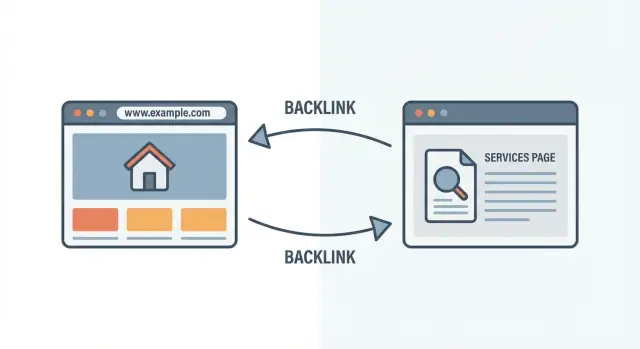
What homepage links and deep links actually do
A homepage link is a backlink that points to your site’s main page. A deep link points to a specific page inside your site, like a product page, a service page, or a blog post.
The difference is where the authority lands first. A homepage link tends to raise trust for the whole domain over time because the homepage usually links to the rest of the site. A deep link concentrates that boost on one URL, which can help that exact page compete in search results sooner.
That’s the real tradeoff in homepage links vs deep links: broad trust building vs targeted ranking help. Broad trust matters when your site is new, your brand is unknown, or a lot of pages are struggling. Targeted help matters when one page is already close to ranking well but needs more authority to move up.
“Push one page over the line” usually means the page is doing the basics right (useful content, clear match to the search intent, solid on-page setup), but it’s stuck just outside the top results. A bit more authority can be the difference between being overlooked and getting steady clicks that turn into leads or sales.
Common signs a page is “close” include:
- It ranks on page 2 or low page 1 for an important keyword, but traffic is inconsistent.
- It gets impressions but not many clicks because stronger competitors sit above it.
- It converts well when people do land on it, so more visibility has real business value.
- It has fewer quality backlinks than the pages ranking above it.
There isn’t one perfect answer for every site. Even within the same business, the best target can change month to month. Often, a small mix works best: build some authority at the domain level, while also sending a few high-quality links to the page that needs a final nudge.
Start with the goal: trust building or one page to rank
The quickest way to choose between homepage links vs deep links is to define what “success” means right now. Links are limited. Point them to the wrong place and you can end up with nicer metrics but no meaningful business result.
Most goals fall into a few buckets: building overall trust and brand searches, improving rankings for a category or service page, increasing signups or purchases from one high-intent page, generating local leads, or getting new content discovered faster.
Each goal changes where links should point. If you need broad trust, a stronger homepage can help your whole domain look more credible, which can lift many pages over time. If you need one page to rank (a money page, a key category, a location page), deep links send clearer signals about what you want to win.
Timeframes matter, too. Homepage-focused links often show up as long-term stability: the site looks stronger overall, and internal links can pass that strength around. Deep links are more about quicker wins: you’re giving one URL a direct push, which can be the difference between position 11 and position 5.
A simple deciding question: if one page ranked better next month, would that solve the problem? If yes, start with deep links. If not, and the real issue is low trust across the site, lean more on the homepage.
When homepage links matter most
Homepage links matter most when the underlying issue is trust, not one specific page. Strengthening the “front door” can be the fastest way to change how search engines and people perceive the brand.
You usually benefit from homepage backlinks when several of these are true:
- The domain is new, recently rebranded, or has very little history.
- The site has few quality mentions and almost no links from recognized sites.
- Many pages are indexed, but impressions stay low across the whole site.
- Brand searches are rare.
- New content takes a long time to get discovered.
A strong homepage works as a credibility signal for the whole brand. It can also help discovery: a linked homepage tends to get crawled more often, which can speed up how quickly new pages get found and revisited.
The main upside is compounding value. When domain trust improves, many pages can benefit over time, especially if your internal linking is clear.
One caution: homepage links aren’t a shortcut around weak pages. If a key page doesn’t match intent, loads slowly, or says the same thing as ten competitors, more homepage authority won’t fix that by itself.
When deep links matter most
Deep links matter most when one specific page is already strong and just needs a push. A common pattern is a page sitting in positions 6 to 15 for its main query with steady impressions over a few weeks. That usually means search engines understand the topic, but you’re losing on authority or relevance signals.
For competitive searches, page-level links can be more direct than sending everything to the homepage and hoping internal links carry the value across. If the query is clearly about one thing (a product, a comparison, a pricing page), links pointing straight to that page strengthen the connection between the page and the topic you want it to win.
Deep links often have the biggest impact on commercial pages, such as product pages, category pages, landing pages built around a single offer, comparison pages, and well-built “best of” pages.
They work best when the page already satisfies search intent. If visitors click in and bounce because the page is thin, confusing, or missing basic answers, links won’t solve the real problem. Tighten the page first: make the promise clear, answer the obvious questions, add proof, and keep the next step simple.
How internal linking changes the decision
A backlink rarely “stops” at the page it lands on. When link equity hits your homepage, some of that value can flow through your site, but only if internal links give it clear paths.
If the homepage is well connected, a few strong homepage backlinks can lift the whole site. Your key pages rise with it because they’re linked from navigation, category pages, and prominent sections.
Internal linking usually fails in predictable ways:
- Important pages are buried 4 to 5 clicks deep.
- Internal anchors are vague (for example, “click here” or “learn more”).
- Key pages aren’t linked from high-visibility areas (menu, homepage sections).
- Orphan pages exist (no internal links point to them).
- Too many near-duplicate pages split attention and internal links.
When internal linking is weak, the “homepage links vs deep links” choice often shifts toward deep links. Homepage links can still improve overall trust, but the pages you want to rank may not get enough of that boost.
A practical rule: if your target page is hard to reach from the homepage (or isn’t linked clearly), prioritize deep links until internal linking is fixed.
A quick internal flow check
Pick one money page and try to reach it like a normal visitor. If you can’t get there in 2 to 3 clicks, you have a distribution problem.
Then look at the internal anchors pointing to that page. If they don’t mention what the page is about, the signal is weaker than it should be.
A simple step-by-step way to choose your link targets
If you’re stuck between homepage links vs deep links, treat the decision like a mini audit. The goal is a clear winner, not a “maybe.”
1) Choose your pages before you choose your links
Name one page that matters most right now (your primary target). Then pick one or two supporting pages that either help the primary page convert (pricing, demo, contact) or cover a closely related topic that can pass relevance and authority through internal links.
2) Confirm the primary page can actually benefit
In Google Search Console, check whether the page is indexed and whether it’s already getting impressions for the terms you care about. If it’s not indexed, fix that first. If it has no impressions after a reasonable amount of time, the problem is often intent, content quality, or technical issues, not “lack of links.”
3) Do a fast competition check
Search the main keyword and scan the top results. You’re answering one question: are you competing with well-known brands and heavy, established pages, or with smaller sites you can realistically beat? If the entire top 10 is dominated by huge sites, you may need more overall authority first or a narrower query.
4) Make sure your own site supports the target
Before you point backlinks at a page, make sure your site helps it:
- Add a clear link from the homepage or main navigation when it makes sense.
- Link to it from relevant blog posts or hub pages.
- Use anchors that describe the topic naturally.
5) Pick a split and set a review date
Choose a simple ratio (for example, 70% of new links to the primary page and 30% to the homepage or a hub page). Set a date to review rankings and impressions, often 4 to 6 weeks.
Common mistakes that waste links
Most link building disappointment isn’t about the links themselves. It’s about where they point, what they support, and what happens after a visitor lands.
A common trap in the homepage links vs deep links debate is trying to do everything at once. If you spread a small budget across ten URLs, you often move none of them enough to matter.
Mistakes that usually burn time and money:
- Splitting effort across too many pages, so no single page gains momentum.
- Sending links to a page that isn’t the best match for the query.
- Treating the homepage as a magic funnel while the rest of the site stays disconnected.
- Repeating the same keyword-heavy anchor text again and again.
- Building links to thin, duplicated, or outdated pages.
A simple rule: if you wouldn’t confidently send a real customer to that page, don’t send your best backlinks there either.
Quick checklist before you buy or build more links
Before you spend money or time on links, do a quick reality check. Link waste usually happens when a page is hard to understand, hard to reach, or hard to measure.
- Homepage clarity: In the first screen, can a new visitor tell what you sell and who it’s for?
- Click distance: From the homepage, can someone reach the page you want to rank in 2 to 3 clicks?
- Signs of traction: Does the target page already show up anywhere for related searches (even positions 20 to 80)?
- Best page for the intent: Is the target page clearly the best match you have for that query?
- Measurement plan: Define success first (1 to 2 primary queries, current rankings, organic visits), then set a check-in date.
If your pricing page is buried under multiple menus and your homepage message is vague, buying more backlinks to either page can disappoint. Tighten the homepage copy, make the pricing page easier to reach, then add links with a clear goal.
Example: choosing links for a site with one key page
Picture a small SaaS site on a new domain. It has a homepage, a few basic pages (pricing, about, blog), and one high-converting landing page for a specific use case.
The real question is simple: do you need the whole domain to look trustworthy first, or do you need that one landing page to move a few positions and start converting?
If the domain is new and almost nothing ranks, starting with a few homepage links can raise the “background” trust of the site. Once the site looks less new, shifting new links to the landing page often works better.
If the landing page already sits around positions 8 to 20 for its main query, deep links are often the faster lever. That approach works best when the page is already strong on basics: clear intent match, good speed, helpful content, and a clean title and heading.
Next steps: pick a split, measure, and adjust
Don’t treat homepage links vs deep links like a forever decision. Pick a simple split, run it for a short window, and let results guide the next round.
Keep the plan small enough that you can tell what worked. Choose a limited number of links for the next month, split them between the homepage and your target page, and avoid changing ten other things at the same time.
Once a month, check the same signals so you don’t chase noise: rankings for the target query, impressions and clicks to the target page, conversions from that page, and whether internal links are actually sending users to it.
If you want low-friction execution, services like SEOBoosty (seoboosty.com) can fit this goal-first approach because you choose an authoritative placement and decide whether it should point to your homepage for broader trust or a specific URL for a targeted push.
FAQ
What’s the simplest difference between a homepage link and a deep link?
A homepage link points to your main URL and tends to lift trust signals for the whole domain over time. A deep link points to a specific page and concentrates the benefit on that one URL, which can help it move up faster for a particular query.
How do I decide whether to build homepage links or deep links first?
Start with deep links if one page ranking better next month would solve your problem. Lean toward homepage links if the whole site feels weak in search, like many pages have low impressions and the domain is new or rarely mentioned.
When do homepage backlinks matter most?
Homepage links are most useful when you need overall trust: new or rebranded domains, very few quality mentions, low impressions across many pages, and slow discovery of new content. They’re a strong “brand credibility” signal, especially when your internal linking distributes value well.
When do deep links matter most?
Deep links matter most when a specific page is already solid but stuck, often around positions 6 to 15 with steady impressions. Sending authority straight to that page can be the fastest way to close the gap with the URLs ranking above you.
What does it mean when a page is “close” and just needs a push?
Usually it means the page is doing the basics right and has clear relevance, but it’s just outside the top results. You’ll often see impressions, some rankings traction, and good conversions from the traffic it does get, suggesting more authority could translate into meaningful clicks.
How does internal linking affect the homepage vs deep link choice?
If your target page is more than 2 to 3 clicks from the homepage, or it isn’t linked clearly from navigation or relevant pages, homepage authority may not reach it well. In that case, prioritize deep links while you fix internal links so equity can flow naturally.
What should I verify before pointing deep links at a page?
Check that the page is indexed and already getting impressions for related searches in Google Search Console. If it has zero impressions for a while, fix intent match, content quality, or technical issues first, because links won’t rescue a page that doesn’t deserve to rank.
What’s a good split if I want to do both homepage links and deep links?
A practical starting split is 70% of new links to the primary target page and 30% to the homepage or a relevant hub page. Keep the plan simple, then review rankings, impressions, and conversions after about 4 to 6 weeks and adjust based on what actually moved.
What mistakes usually waste backlinks?
Spreading a small budget across too many URLs is the biggest waste, because nothing moves enough to matter. Other common mistakes are linking to pages that don’t match intent, relying on the homepage while key pages are buried, and repeating the same keyword-heavy anchors over and over.
How can SEOBoosty help with choosing between homepage and deep link targets?
If you want predictable execution, a service like SEOBoosty can fit a goal-first approach because you choose an authoritative placement and decide the target URL. Use it to point links to your homepage when you need broader trust, or to a specific page when you need a targeted ranking push.
Share