Hreflang link targeting: choosing the right locale URL
Learn how hreflang link targeting helps you point backlinks to the right locale pages, keep language signals clean, and build authority per market.
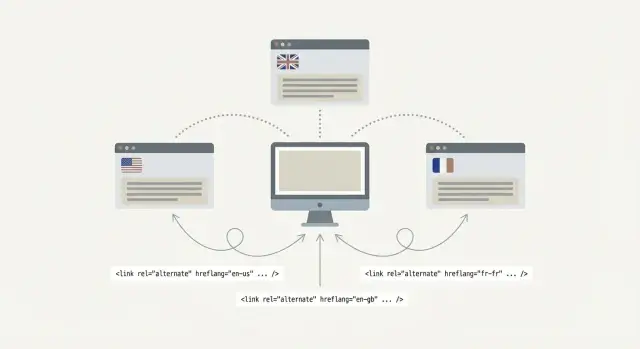
The problem: links can pull authority into the wrong locale
A backlink doesn’t only pass authority. It also carries language and location context. When that context points to the wrong version of your site, you can end up strengthening a market you don’t care about while the market you do care about stays weak.
That’s why hreflang-aware link targeting matters. The same mention on a strong site can be a win for one country page and a headache for another, depending on which URL it points to and what language surrounds it.
When links point to the wrong language or country page, a few predictable things happen. Search engines start seeing the “wrong” locale as more important. Users land on a page that feels off (wrong currency, spelling, shipping rules, or just the wrong language) and leave. Over time, that mix of signals makes it harder for the right locale to rank.
Common signs:
- Your US page ranks in the UK, while the UK page doesn’t move.
- Search results show the wrong language in titles or snippets for some users.
- Visitors keep switching country selectors after landing (or they bounce quickly).
- Link equity stacks up on one locale URL while others stay under-linked.
- You see impressions in one market but conversions in another.
This gets more painful as your site grows. More locales, shared templates, and similar copy mean small mistakes compound fast. One misplaced link won’t ruin an international setup, but dozens can quietly tilt the whole system.
A classic example: a French tech blog mentions your product in French, but links to your /en-us/ page because it’s the default URL someone copied. The link is still valuable, but it reinforces the wrong pairing (French context pointing to English US content). Over time, French queries can start preferring the wrong page even if your hreflang is technically correct.
A quick refresher on hreflang, canonicals, and locale URLs
Hreflang is a hint that helps search engines show the right page to the right audience. It says: “This URL is for this language or region, and here are the equivalent alternatives.” It doesn’t force rankings, it doesn’t merge pages, and it doesn’t guarantee that one locale page will inherit another’s signals.
One common misconception is that hreflang “shares” authority between pages. In reality, links still point to a specific URL. So your target choice matters because that’s where the clearest link equity lands.
Hreflang vs canonical: what happens if they disagree
Canonical tags tend to win when they conflict with hreflang. If your French page canonicals to the English page, you’re effectively telling search engines: “Treat the English URL as the main version.” That can undercut your France targeting even if hreflang exists.
A practical rule:
- Hreflang connects equivalents.
- Canonical chooses the preferred version for indexing.
If you want multiple locale pages indexed, each locale page usually needs a self-referencing canonical (or at least a canonical that stays within the same locale cluster). If canonicals collapse everything to one URL, hreflang won’t fix it.
Language vs region targeting in plain terms
Language targeting is about the words on the page (en, fr). Region targeting is about a market variant (en-US, en-GB). Use region codes when the content truly differs by country: pricing, shipping, legal details, spelling, or availability.
For link targeting, the takeaway is simple: authority flows most clearly when links point directly to the locale URL you actually want to rank in that market. Hreflang helps route the right users, but it doesn’t replace building strength on the right page.
Think of hreflang as signposts. Backlinks are the roads leading to a specific address. If you build roads to the wrong address, the signposts can help a bit, but your strongest signals still collect in the wrong place.
Set up your locale map before you decide link targets
Before you point a new backlink at your site, create a locale map: a list of every market you serve and the one exact URL that represents that market. It’s basic, but it prevents the most common mistake: sending authority to a page that isn’t meant to rank in that country or language.
Once you have a map, it becomes the rulebook. When a link opportunity shows up, you don’t guess. You look up the correct destination.
Be strict about URL format (subfolder vs subdomain, trailing slash, parameters). Each locale should have one clean, permanent URL.
Also define your default page. Some sites use a global selector; others use a specific locale (often en-US) as fallback. Whatever you choose, label it clearly so everyone gives the same answer.
Finally, validate the basics on each locale URL. Links can’t rescue a broken destination.
Quick checks:
- The page has a self-referencing canonical (not pointing to a different locale).
- It returns 200, loads without redirects, and is indexable.
- The language matches the locale you claim.
- It isn’t blocked by noindex, robots rules, or a login wall.
- Hreflang annotations match the URLs in your locale map.
Example: if you have /en-us/ and /en-gb/ and a US publication links to your brand, the safe default is the US URL. If that link points to /en-gb/, you can strengthen the wrong page and make Google less confident about which version should rank in the US.
Step by step: choose the right locale URL for each link
The goal is straightforward: send authority to the page that should rank in that market.
A process that holds up in real life:
- Identify the market behind the link source (audience and language).
- Match the link to the closest same-intent page (home, category, product, article).
- Prefer the same language first. If the surrounding copy is in French, the target should be French when possible.
- Choose country-specific over language-only when key details differ (pricing, shipping, regulations, contact details).
- Confirm the page is indexable and not canonicalizing to another locale.
Homepage links are where teams get sloppy. If a US-focused site recommends your brand, send the link to the US homepage, not a global selector. Use a global page only when it’s genuinely the best match for broad intent and it doesn’t push visitors into the wrong language.
For category and product pages, follow user intent. A “best running shoes in the UK” list should land on the UK category or UK product page when size guides, currency, or delivery terms differ.
For blog posts and guides, keep language aligned. If the same article exists in Spanish and English, Spanish content should link to the Spanish version. Mixed-language links look like mistakes to readers and muddy your signals.
When it’s OK to rely on hreflang alternates
Sometimes you can link to one locale and let hreflang handle alternates, but do it deliberately:
- You only have one version today and other locales aren’t published yet.
- The mention is brand-level and a global page is the cleanest match.
- The linking site has a genuinely mixed audience.
- The target page has strong internal paths that route users to local versions.
How to split link building across markets without chaos
Without a plan, one strong locale often absorbs most authority by accident. It’s the easiest URL to share, the one your team remembers, or the one publishers default to.
The fix is to decide up front how you’ll distribute links by market. You don’t need to equalize everything. You need to support the pages that should rank in each country.
A simple approach:
- Put most links into your primary revenue market when it matches the audience and intent.
- Give each priority locale a steady baseline so it isn’t starved.
- Add extra links to specific locales during launches, seasonal peaks, or local PR moments.
“Choose your country” hubs can help, but only when they’re useful for humans. They’re not a magic SEO bucket. If people don’t want that page, sending links there can waste authority and hurt conversions.
For campaigns tied to one country, keep the target local. If you’re running a France-only promotion, links should point to the French URL with French context around the mention.
Make the link look natural in the right language context
This isn’t only about choosing the correct URL. It’s also about making the link fit the page it appears on.
Start with anchor text. Use words that a real writer for that publication would pick in that language. Don’t force exact-match keywords if they sound unnatural.
The surrounding text matters just as much. If the article is in French, the sentence around the link should be French and should describe a French destination. A link to a UK page inside a French paragraph can work, but it often reads like a copy-paste error.
Keep locale-specific promises consistent. Links feel “wrong” when the copy suggests something the destination can’t deliver.
Mismatches to watch for:
- Currency and pricing format (USD vs GBP vs EUR, VAT included or not)
- Shipping promises (countries served, delivery times, return rules)
- Legal language (privacy terms, regulated claims)
- Support expectations (hours, local contact details)
- Spelling and vocabulary (US vs UK English)
Tracking is fine, but don’t change the locale target to make tracking easier. If you need attribution, add UTM parameters to the same locale URL you chose.
Common mistakes that confuse language targeting
Most international SEO problems aren’t caused by hreflang itself. They come from mixed signals across links, canonicals, and redirects.
A common trap is linking everything to one “main” version (often US or global) and expecting hreflang to sort it out. Hreflang helps with page selection for users, but it doesn’t guarantee link equity ends up distributed across locales.
Another big issue is sending links to a page that immediately canonicals to a different locale. In practice, that link becomes a vote for the canonical target, not the URL you meant to build.
Technical signals that break the chain
Hreflang reciprocity matters. If page A lists page B as an alternate, page B should list page A back. Missing return tags can cause search engines to ignore the set.
Auto-redirects are another common culprit. If bots and users are forced by IP or browser language to a different version, crawlers may struggle to access and index each locale consistently.
Also watch for translated pages that are noindex or blocked by robots rules. Teams build links to them because they look correct to humans, but search engines can’t credit a page they’re told not to index.
A fast pre-check before placing a link:
- The target URL returns 200 and does not redirect to another locale.
- The canonical points to the same locale URL.
- Hreflang includes the full set and return tags exist.
- The page is indexable.
- Users can reach the locale without forced redirects.
Quick checklist to validate hreflang-aware link targeting
Before you scale outreach or buy placements, spot-check what’s already happening.
Pick five recent backlinks from different sites. For each one, note:
- Which URL it points to
- The language and country intent of the page hosting the link
Then validate:
- The link lands on the intended locale URL (not a different country version).
- The target page’s canonical points to itself (or the correct locale URL).
- Hreflang exists and includes return tags from alternates.
- In a clean browser session, the page stays in the same locale (no forced bounce).
- The target matches the publication’s language and audience intent.
If something fails, the fix is usually consistency, not complexity. If your US page canonicals to a global “/en/” page, links to /en-us/ won’t build authority where you think. If hreflang is missing return tags, your annotations can look unreliable.
Example: choosing link targets for US, UK, and France
Imagine one brand with three site versions: en-US (United States), en-GB (United Kingdom), and fr-FR (France). Each has its own URL for the same product, and each page points to the others with hreflang.
A major tech blog writes a review in English, with most readers in the US. The best target is usually the en-US page. You match the reader’s market intent and send authority straight to the URL you want ranking in the US.
If the blog is UK-based and references UK pricing and spelling, point the link to en-GB. Even though both pages are English, search engines treat them as different targets for different audiences.
A common decision is product page vs pricing page. Follow what the article is really about:
- If it focuses on features and use cases, link to the locale product page.
- If it focuses on cost and plans, link to the locale pricing page.
If only one locale has the content today (for example, no fr-FR pricing page yet), create the missing page first if you can. If you must choose right now, link to the closest match and treat it as temporary. As soon as the local page exists, future links should go there.
To confirm you picked well, watch the next few weeks for movement in the intended market: the correct locale URL starts ranking, clicks and impressions rise for that country, and the wrong locale appears less often.
Next steps: standardize your rules and scale link building safely
Hreflang-aware link targeting breaks when people decide targets on the fly. Fix that with a short rulebook anyone can follow.
Your rulebook should answer:
- Which locale URL gets links for each market
- When (if ever) a global page is allowed
- What to do when a locale page doesn’t exist yet
A solid starter set:
- Use the matching locale URL as the default target.
- Don’t point links to a URL that canonicals to a different locale.
- If a locale is missing, create it first or pause link building for that market.
- Log placements with market, target URL, and canonical.
Then keep a simple monthly audit: check that key locale pages still self-canonical, hreflang alternates still match (with return tags), and nothing is accidentally noindex.
If you’re placing high-authority backlinks through a provider where you can choose exact target URLs, that control is especially useful for international sites. For example, SEOBoosty (seoboosty.com) lets customers select domains and point each backlink to the specific locale page they want to strengthen, which helps keep authority flowing to the right market instead of drifting to a default URL.
FAQ
What actually goes wrong when backlinks point to the wrong locale page?
If a link points to the wrong locale URL, you can build authority for the market you don’t care about while your target market stays weak. It can also send users to the wrong language, currency, or shipping rules, which increases bounces and makes search engines less confident about which page should rank where.
How do I choose the right locale URL for a new backlink?
Start by matching the linking site’s audience and language to your locale map, then choose the closest same-intent page (home, category, product, or article). As a default, match language first, and use the country-specific version when pricing, shipping, or legal details differ.
Does hreflang automatically share authority between language versions?
No. Hreflang helps search engines understand equivalent pages, but it doesn’t move link equity between them. A backlink strengthens the exact URL it points to, so you still need links aimed at the locale URL you want ranking.
What happens if hreflang and canonical tags disagree?
Canonical tags usually override hreflang when they conflict. If your French page canonicals to the English page, links to the French URL may end up supporting the English canonical instead, which undermines local rankings.
When should I use language-only (en) vs region-specific (en-US, en-GB) targeting?
Use a language-only code when the content is truly the same across countries and you mainly need language matching. Use language-plus-region when the page differs by market, like currency, VAT, shipping terms, availability, spelling, or legal requirements.
What is a “locale map,” and why do I need one before building links?
Create a locale map that lists each market and the one exact URL that represents it, including a clearly defined default. Then make sure each locale URL is stable and clean, so people don’t improvise and accidentally send links to the wrong version.
What are the quickest checks to run before placing a link to a locale URL?
Check that the target URL returns 200, doesn’t redirect to another locale, is indexable, and has a self-referencing canonical for that same locale. Also confirm the hreflang set is consistent with return tags, so the alternates are recognized as a group.
When is it OK to link to a single global page and rely on hreflang?
It’s fine when you genuinely only have one version, when the mention is brand-level and a global page is the best match, or when the linking site has a mixed audience. Even then, make sure the page helps users reach the right local version without forcing them into the wrong language.
How do I split link building across multiple countries without creating a mess?
Decide a simple distribution plan upfront: prioritize your main revenue market when it matches the audience, keep a steady baseline for each priority locale, and add bursts for local launches or seasonal pushes. This prevents the “default” locale from absorbing most links just because it’s the easiest URL to share.
Does the language around the link (anchor text and paragraph) really matter?
Yes, because the surrounding language and promises affect both user trust and relevance signals. If the text is in French but the link goes to an English US page with USD pricing, it reads like a mistake and can increase bounces and mixed signals.
Share