International SEO link building: choosing local vs global domains
International SEO link building for new markets: decide between country sites and global domains, align geo signals, and avoid mismatched targeting.
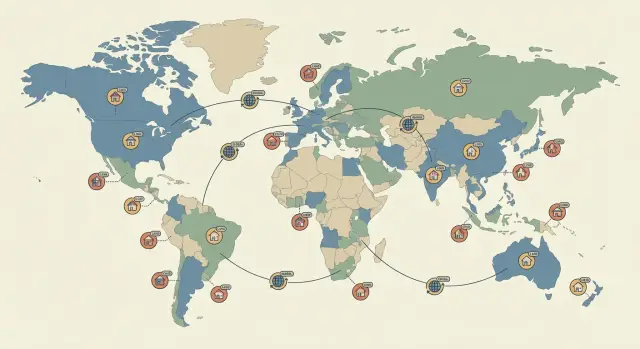
The real problem: links that point Google to the wrong place
When you expand into a new country or language, it’s tempting to think new pages and translated copy are enough. They’re not. Links are one of the strongest hints that tell Google where you belong. If those hints point to the wrong place, you can build visibility in a market you didn’t mean to target.
This is what mismatched geo signals look like in real rankings: your new regional pages don’t climb locally, while unrelated pages start ranking in another country. You might see Spanish content shown mostly to users in Spain when you’re trying to grow in Mexico, or your global homepage outranking your country page in local results.
Backlinks can push relevance toward the wrong country or language because they carry context. A link from a site that’s clearly tied to one region (local audience, local topics, local brand mentions) can act like a vote for that region. In international SEO link building, collecting “the best” links without checking geo context often creates a tug-of-war between markets.
Symptoms usually show up within a few weeks to a few months of expansion:
- Traffic grows, but from the wrong country
- Search Console shows mixed impressions across countries for the same pages
- Local pages rank for broad terms, but not local-intent terms
- Results show the wrong version of your site (or the wrong competitors)
- Rankings swing between countries
This often starts when teams reuse the same link sources for every market, or buy a small batch of powerful links and point them at a new country page without balancing them. Even premium placements (for example, on global tech publications) can be a mismatch if your goal is strong local visibility rather than global authority.
Country-specific vs global domains in plain terms
Country-specific domains are tied to a country code, like .de, .fr, or .com.au. They often signal, “this site is meant for people in that country.” Global domains use general endings like .com, .org, or .io. On their own, they don’t point to a single country.
The common mistake is thinking the domain ending is the whole story. It’s only one clue. A .com site can still be strongly associated with one market if most of its readers, writers, and references are in that country.
What “local” really means
Google picks up geo hints from patterns. A site’s audience and real-world ties often matter more than its language alone. English is used in the US, UK, Canada, Australia, and more, but the sites people read (and the businesses they cite) are not the same.
A “global” site can be locally strong when most signals point in one direction, for example:
- Most of its traffic and mentions come from one country
- It covers country-specific topics, news, or regulations
- It has a clear local presence (address, contacts, brand associations)
- It earns links mostly from that country’s sites
So a backlink from a .com can act like a local vote if the site is clearly part of that country’s web ecosystem.
If you serve multiple countries in one language
This is common with Spanish, French, and English markets. The risk is letting one country’s backlink profile swamp the others. A cleaner approach is to think in mixes: support each target market with country-specific backlinks, then add a layer of global domain backlinks from truly international publications that fit your topic.
What creates geo signals (and where backlinks fit in)
Google doesn’t decide your “country” based on one factor. It reads a bundle of hints and tries to guess who your pages are for. International SEO link building works best when it supports the same story your site is already telling.
Country signals vs language signals
Country signals are about where the business or offer seems to live and who it serves. Common hints include the domain type (a ccTLD like .de or .fr), the site’s stated audience, and trust cues like an address, phone number, and contact details.
Language signals are more straightforward: the visible language on the page, headings, navigation labels, and overall content focus. If your page is in Spanish but your menus, footer, and key pages keep switching to English, the language story gets muddy.
These signals usually work best as a consistent bundle:
- Domain and site structure (ccTLD, subdomain, subfolder setup)
- On-page language (copy, headings, navigation, templates)
- Local business cues (address, phone, currency, service area)
- Content topic and examples (local terms, cities, regulations, case studies)
- Backlinks and mentions (who links to you, and in what context)
Where backlinks fit
Backlinks act like third-party votes about relevance. But it’s not just the link. The context around it matters: the topic of the linking page, the surrounding text, and whether that site is aimed at a specific country or a global audience.
A link from a well-known global tech publication can help a new market page build authority without pushing a strong country signal. A link from a country-focused site written for local readers can add a clearer geo hint, especially if the linking page is about local services, local pricing, or local regulations.
One strong signal rarely overrides many mixed ones. For example, a Spain-focused Spanish landing page with a Mexico phone number, USD pricing, and mostly US-based backlinks can confuse search engines. The goal is consistency: a few strong country cues plus many small supporting cues, all pointing in the same direction.
Define your target: country, language, or both
Before you pick link sources, get clear on what you’re trying to rank: a country market, a language audience across many countries, or a global version of the language. This choice changes what a good backlink looks like, because the wrong mix can send mixed location signals.
If your goal is one country (for example, Germany), you usually want most links to look relevant to that country. If your goal is a language across countries (for example, Spanish across Latin America), you can use a broader mix, but you still need to avoid over-weighting one country unless it’s your main revenue market.
Also decide which pages you’re promoting. Are you pushing country-specific pages or language-only pages? Backlinks should point to the page that matches the searcher’s intent, not just the homepage.
A simple way to keep this clean is to write a one-line target statement for each key page:
- Primary country: where you want this page to compete
- Primary language: what the page is written in
- Secondary markets: any other countries you still want traffic from
- Link mix rule: local-first, balanced, or global-first
Local-first means most links come from domains strongly associated with that country, with a small amount from global sites. Balanced is a steady mix of local and global. Global-first is mainly international publications, used when you’re targeting broad topics across many countries.
This page-by-page mapping prevents geo confusion, like building mostly US-focused links to a UK pricing page.
Quick competitor scan to choose the right link mix
A quick competitor scan keeps you from guessing. It shows what Google already expects to see for that market, and it helps you avoid building a profile that looks global when you actually need local trust (or the other way around).
Pick 5 to 10 real competitors for each market, based on page-one results for the exact queries you care about in that country or language. Then look for where they get mentioned. You’re not trying to copy every link. You’re looking for repeatable patterns that suggest which sources carry weight in that region.
Capture notes fast, not perfectly. For each competitor, write down what the source represents:
- Local press and local business sites (local relevance)
- Industry publications and niche blogs (topical authority)
- Professional associations or event sites (trust and legitimacy)
- Local directories that actually rank and get traffic (sometimes useful, often noisy)
- Big global publications (broad authority)
After 30 to 45 minutes, you should be able to answer one question: are rankings dominated by local mentions, global mentions, or a mix?
Separate authority from local relevance when you compare sources. A high-authority tech blog can be powerful, but it might not help much with geo targeting if competitors are earning local citations and local press. On the flip side, if the top results have very international link profiles, you may not need to over-invest in local-only sites.
Use what you find to set a realistic target mix. For example, “two thirds local sources, one third global authority” for a country page, or “mostly global authority with a few local trust links” for a language page that isn’t tied to one country.
Step-by-step: how to choose link sources for a new region
When you expand, the fastest way to get clean signals is to narrow the scope: one market, one page, one clear goal. That keeps your international SEO link building from turning into random mentions that confuse search engines.
A simple 5-step method
- Pick one region and one page to push first. Choose the page that should rank in that region, not your homepage.
- Decide which 3 to 4 source types you’ll use. A balanced mix often includes local industry sites, local press, a few global industry publications, and partner or supplier sites that already work with you.
- Set a starting ratio, then review it monthly. Many teams start around 60% local and 40% global for a new market. If you see strong local rankings but weak authority, add more global. If you see the wrong country showing up, increase local.
- Match link language to page language when you can. A Spanish page earning mostly English anchors and context can look off. It’s not always harmful, but it’s a common way to create mixed signals.
- Keep the topic tightly aligned with the page. A link from a local news story about hiring is less helpful than a link from a piece about your exact product category.
Gut-check example: if you’re launching in Canada (English), you might start with Canadian business publications and industry associations, then add a few well-known global tech sites for authority. If your first links are mostly from unrelated global sites, you may rank, but not always where you want.
How to match link sources to your site structure
Your site structure tells Google how you separate markets. Your backlinks should support that same map. When links and structure disagree, you can get the wrong country ranking, or one market can drown out the others.
If you use country folders for each market (for example, separate sections for Mexico-Spanish and Spain-Spanish), the cleanest pattern is local links pointing to the matching local pages. Mexican sites linking to your Mexico pages, and Spanish sites linking to your Spain pages, reinforces the difference.
Global domains can still point to local pages, but use them with intent. A global tech publication linking to your Mexico-focused page can work if the page is clearly for Mexico (currency, shipping, contact info, testimonials). If the page is generic Spanish with no Mexico cues, that same link can blur your targeting and make it harder to rank where you want.
One language, multiple countries
This is where “one market dominates” happens: you build many links to one Spanish market, and Google starts treating that section as the main one. Keep balance by aiming for a steady mix per country, and by making sure each country page earns its own mentions.
A practical rule of thumb:
- Country pages: mostly country-specific backlinks, plus a smaller share of global mentions
- Language-only pages (one Spanish section for all countries): more global domain backlinks, fewer country-specific ones
- Separate ccTLDs (like .mx and .es): keep links very local to each ccTLD
Multi-language sites
If you have separate sections for English, Spanish, and French, support each language section with sources that naturally publish in that language. It’s fine if the domain is global, but the surrounding context should match the language and audience.
For example, if you’re building links for a new French section, a few global publications can help with authority, but you still want French-language placements that point directly to your French pages.
Common mistakes that create mismatched geo signals
A common trap is assuming a handful of local links will flip a switch. Local rankings move when signals line up across content, site structure, and links over time. A few country domains can help, but they rarely outweigh everything else if the page still looks global or looks like it’s for a different market.
Another mistake is sending most backlinks to the wrong page version. This happens when a team promotes the English homepage while trying to rank a Spanish Mexico page, or when all links point to a language hub even though the target is a specific country page. Google then receives mixed hints about which page should represent that market.
Anchor text can sabotage you too. If many links mention “Madrid” while you’re trying to rank in Mexico City, you’re building a clear mismatch. Even if the page language is correct, those words act like extra location clues.
Be careful with pages that mix markets. If one page says “We serve Spain and Mexico” and you build links as if it’s a local landing page, you’re creating confusion. Market-specific pages with clear intent are easier to support with the right sources.
Finally, avoid repeating the same link source pattern everywhere. If every market gets only global tech blogs (or only local directories), your footprint looks unnatural and you miss what actually works in that region.
Quick red flags to watch for:
- Links point to the wrong language or country page
- Anchors repeatedly reference a different country, city, or currency
- One page tries to rank in multiple countries at once
- You rely on a tiny number of local domains and expect instant results
- You use the same type of sites for every market with no variation
A quick checklist before you place or request a backlink
Before you spend money or time on a link, do a 60-second sanity check. One mismatched signal won’t ruin your rankings, but a pattern of them can confuse Google about who you serve.
- Is the target page clearly for one country and one language (currency, service area, address, spelling, or a clear market statement)?
- Do most new links come from sites people in the target country actually read (not just sites that happen to use the right language)?
- Does the text around the link match the market (mention the city or country when it makes sense), or stay market-neutral if the page is global?
- Are you sending links to the correct page version every time (no mixing with the homepage just because it’s easier)?
- Is your mix intentional: country-specific backlinks for local visibility, and global domain backlinks for authority and broader trust?
Then read the placement as a real visitor would. If the mention feels natural to someone in your target market, the geo signal usually makes sense.
Example: if you’re pushing a Mexico-focused Spanish landing page, links from Spanish-language sites based in Spain can help, but too many can make your profile look Europe-leaning. Mix in Mexico-relevant sources and keep the link context aligned with Mexico.
Example scenario: expanding into two Spanish-speaking markets
A US SaaS launches Spanish pages for two new markets: one section for Mexico and one for Spain. The content is similar, but pricing, support hours, and testimonials are different. The goal is simple: rank in Mexico for Mexico-intent searches, and in Spain for Spain-intent searches, without sending mixed signals.
For Mexico, the safest early sources are Mexico-leaning domains and Spanish content that clearly serves Mexican readers: Mexican tech media, local business publications, Mexico-focused SaaS directories, and partnerships with Mexico-based agencies. For Spain, look for Spanish (Spain) publications, Spain tech communities, and Spain-focused industry sites. Global Spanish sites can help both, but they shouldn’t be your only anchors, especially in the first months.
A simple 90-day mix plan:
- Days 1-30: 2 Mexico-leaning links to the Mexico section and 2 Spain-leaning links to the Spain section (keep anchors brand or neutral)
- Days 31-60: add 1-2 global Spanish links to each section, plus 1 more local link per market
- Days 61-90: increase whichever market is responding, but keep at least 60% local links per market
Track country-level rankings, which pages earn impressions, and where new links point. Also watch organic leads by country.
If Spain pages start ranking in Mexico, pause Spain-heavy links for a couple of weeks and add Mexico-leaning links to the Mexico section only. Double-check that internal links, language selectors, and on-page references (currency, address, support) match the target country.
Next steps: build a simple process you can repeat per market
Treat each new country or language like a small SEO project, not a one-off. A simple written process keeps geo signals consistent as you add more pages, partners, and backlinks.
Start with a single pilot market. Pick the place where you already have the strongest offer or the easiest operations (shipping, support hours, local pricing). Run a short test, then write down what actually moved the needle: which source types sent relevant traffic, which placements helped rankings, and which ones created mixed signals.
A repeatable workflow you can copy market by market:
- Define the page you want to rank and make it the default link target for that market.
- Create a sourcing profile for the region: locally relevant sites plus a smaller set of high-authority global domains that still fit the topic.
- Set simple relevance rules: same topic, same intended audience, and ideally the same language as the target page.
- Track every placement in one sheet: source domain, country focus, language, anchor style, target page, and why it was chosen.
- Review monthly and adjust the mix: if rankings improve but leads are wrong-country, lean more local; if you need authority, add carefully chosen global placements that don’t confuse the market.
If you’re using a curated inventory to secure hard-to-get placements, keep the same discipline: map each placement to the right regional page and make sure the source’s audience fits the market. For example, SEOBoosty (seoboosty.com) focuses on premium backlinks from authoritative sites, which can be useful for global authority, but it works best when you pair those placements with the right local signals for each country you’re targeting.
FAQ
Why is my new country page ranking in the wrong country?
Start by auditing where your new links are coming from and what page they point to. If most new links are from sources tied to the wrong country, slow that market’s link building and add more links from sites clearly associated with the country you actually want to rank in, pointing directly to the correct country page.
Is a country-code domain always better for local SEO than a .com?
A ccTLD (like .de or .fr) is a strong hint, but it’s not the only one. Google also looks at who the site is for, what it covers, and the overall pattern of mentions and links, so a .com can still act “local” if it’s tightly connected to one country.
When should I prioritize local link sources vs global ones?
Use local sources when the goal is visibility in one specific country and the queries have clear local intent. Use global sources when you need broad authority across multiple countries, or when the page is meant to rank internationally rather than in one local market.
How can a “global” site still send a strong country signal?
Because links carry context beyond the anchor text. If the linking site, topic, and surrounding content are heavily tied to one country, that acts like a relevance vote for that market, even if the language matches your target.
What’s a good local-to-global backlink ratio for a new region?
A practical starting point for a new market is about 60% local-leaning links and 40% global authority links, then adjust based on what you see in Search Console and country-level rankings. If the wrong country starts showing up, increase the share of local links and double-check your on-page country cues.
Should backlinks go to the homepage or the country page?
Point links to the page that matches the searcher’s intent in that market, which is usually the country page, not the homepage. Linking to the wrong version is one of the fastest ways to create mixed signals and cause Google to show the wrong page in local results.
Do backlinks need to be in the same language as the page?
If your target page is Spanish, aim for Spanish surrounding context most of the time, because it reinforces the language and audience. A few English links won’t automatically break anything, but a pattern of English-heavy placements can make your signals look mixed, especially early in expansion.
Can anchor text create geo confusion?
Keep anchors mostly branded or neutral unless you’re confident about the exact location intent you want. Repeated city or country mentions in anchor text that don’t match the target market can push relevance in the wrong direction and make rankings swing between countries.
How do I use competitors to decide what link sources I need?
Look at the top-ranking pages for your exact target queries in that country and note whether they’re supported more by local mentions, global publications, or a mix. You’re trying to match what Google already rewards in that market, not copy every link one-for-one.
Are premium backlinks from major sites enough to rank locally?
Use premium authority placements to add overall trust, but don’t rely on them alone for country targeting. Services like SEOBoosty can help you secure hard-to-get links from authoritative sites, and they work best when you pair those placements with enough country-relevant links pointing to the correct regional page.
Share