Marketplace backlink strategy for stronger category pages
Marketplace backlink strategy to strengthen category pages, avoid thin content, and spread authority across listings with clean internal linking.
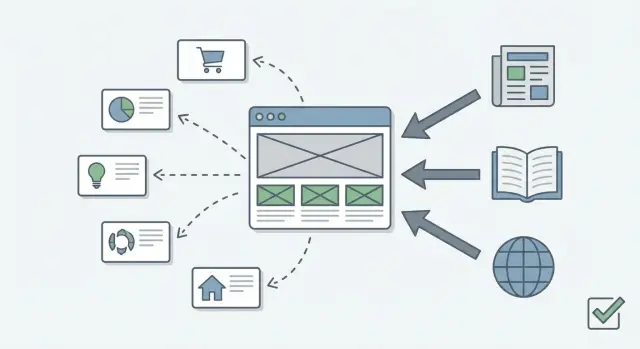
Why marketplaces struggle with backlinks and category SEO
Marketplaces and directories play by different rules than blogs. A blog can earn links to one standout article. A marketplace has thousands of similar URLs, and many of them aren't worth linking to. That makes links harder to earn, and it makes it easier to waste the authority you do get.
For most marketplaces, category pages are the real ranking targets. People search for things like "plumbers in Austin" or "CRM software for startups", not your homepage. If your category pages don't stand out, your best listings stay invisible even if the brand looks trustworthy.
Thin category pages usually show the same few symptoms: they read like a plain list with little guidance, many categories look identical except for one word, filters create lots of empty or repetitive pages, and users bounce because they don't learn anything before clicking around.
The hard tradeoff is scale vs usefulness. Marketplaces want to cover every location, niche, and filter because that's how you capture demand. But if every new page adds little value, search engines and users treat them as duplicates, and links rarely land where you need them.
A simple example: a local services directory creates 300 city pages. The biggest cities have enough providers and a bit of real advice, so they perform. Smaller cities have three listings and the same generic intro. When the site earns a few good backlinks, authority gets spread across hundreds of weak pages, and the strongest categories don't get the full benefit.
This is why a marketplace backlink strategy should start with fewer, better category targets. Make those pages genuinely helpful before you scale. If you're using high-authority placements through a service like SEOBoosty, that focus matters even more because you want every link to reinforce pages that can actually rank and convert.
Pick the right targets: categories, subcategories, and filters
A marketplace has many URLs, but not all of them deserve backlinks. The first job is choosing stable pages that can hold value for months, not days.
It helps to think in three buckets:
- Money pages: pages that directly drive conversions (often main categories like "Used laptops" or "Wedding venues").
- Support pages: pages that help money pages rank (guides, comparisons, "how to choose" content).
- Trust pages: pages that reduce user risk and help reviewers understand your standards (about, editorial policy, review process, seller verification, contact).
When deciding which category pages should receive authority first, prioritize pages with clear demand and business value. Start with top categories with obvious intent, pages already getting impressions but ranking around positions 6-20, and categories with enough listings to look "alive" year-round. Also favor pages you can improve without changing URL structure, and pages that map cleanly to a single main intent.
Choosing between categories, subcategories, and filters is mostly about intent and permanence. Link to a top-level category when it represents a broad, evergreen topic. Link to a subcategory when it matches a specific popular query and you can support it with unique content.
Be careful with filters (price, color, size, "open now"). They're volatile and they can create endless near-duplicate pages. If you must keep some filter pages indexable, treat them like real products: make them stable, canonical, and worth maintaining. Avoid sending backlinks to URLs that could disappear next month because inventory drops, sorting rules change, or tracking parameters get added.
If you're placing premium links, this targeting work matters even more. Every link should land on a page you plan to protect long-term.
Build category pages that aren't thin content
A category page earns trust when it helps a real person choose. If it looks like a blank list with a keyword in the title, search engines often treat it as thin even if you have lots of listings.
Most marketplaces don't need essays. They need proof the page is curated and specific. A solid category page usually includes:
- A short intro that explains what's included and who it's for.
- Sorting options that match intent (most reviewed, newest, price range, location).
- Context near the results, like counts, ranges, and "what to expect" notes.
- A small set of common questions (shipping, availability, requirements, verification).
- A consistent way to handle empty or near-empty states (suggest nearby categories).
One practical approach is to write intros from real inventory signals instead of generic marketing copy. Pull details like the number of active listings, typical price range, popular locations, common brands, and the filters users use most. That creates unique text across categories without sounding spun.
Example: a directory category "Wedding Photographers in Austin" can open with the current count, typical budget range, and the areas with the most providers. Add one sentence on how to compare (style, turnaround time, licensing). That's enough to separate it from dozens of similar pages.
Filtered pages are where thin content spreads fastest. Keep pages indexable only when a filter creates a stable, meaningful set of results that people actually search for. Otherwise, noindex them or block crawling. As a rule of thumb, index major locations, top-level categories, and a few high-demand attributes. Noindex combinations that change daily, low-count filters, and near-duplicate sort orders.
This foundation makes your backlink strategy safer because links point to pages that can hold value, not pages that look auto-generated.
Create linkable assets that support categories
Category pages rarely earn links on their own. People link to things that teach, prove, or summarize something. A reliable approach is to create one or two pages that outsiders want to cite, then use those pages to feed authority back into the categories that make you money.
Good linkable assets for marketplaces include pricing snapshots (monthly or quarterly), trends pages based on your listings, short buyer guides, simple glossaries, and compact "state of the market" pages with one strong chart and a clear takeaway. One good page that earns links beats ten thin pages that look like filler.
You also don't need a massive study. Use internal data you already have and present it clearly: sample size, time period, and how you calculated the numbers. For example, a local services directory can publish a quarterly price range snapshot by city and category, plus a handful of short takeaways.
Once you have an asset that earns links, route value back to categories in a clean way. Keep internal linking obvious and restrained: a small "Explore categories" section, one in-text link where it genuinely helps, and a single related-category box near the bottom. If you publish recurring updates, keep one evergreen hub URL and update it so links keep compounding.
If you're using premium placements, consider pointing some backlinks to the asset page rather than a category page. It's often a more natural target, and it can still pass strength back to categories through internal links.
Internal linking that spreads authority efficiently
A marketplace has thousands of URLs, but only a few should act as authority highways. The goal is to push the strongest internal signals toward the category pages that matter, without spraying links across every filter and paginated page.
Start with a clear hierarchy. Your homepage should point to a small set of top category hubs. Those hubs should link down to stable subcategories, and only then to listings. Editorial pages (guides, comparisons, "how to choose" content) should support the same hubs, not random long-tail filters.
A practical linking map looks like this:
- Homepage to 6-12 top category hubs.
- Category hubs to stable subcategories and a few clearly related categories.
- Editorial hub pages to the same category hubs across many articles.
- Category pages back to their best supporting guides (a small "Learn" block).
- Listings back up via breadcrumbs so authority doesn't dead-end.
Breadcrumbs do a lot of quiet work. Use them on category and listing pages, and keep the breadcrumb trail based on your taxonomy, not on whatever filter a user clicked last. "Related categories" can help too, but only when the connection is obvious.
When linking from articles to categories, avoid stuffing exact-match phrases. A line like "Compare providers in our New York event photographers category" reads naturally and still passes relevance.
Inventory changes can break internal links if you rely on unstable URLs. Prefer category and subcategory URLs over filter combinations, avoid sitewide links to pages that constantly change (like "newest" pages), and keep your top navigation consistent month to month. If a category must be retired, redirect it to the closest parent hub, not the homepage.
Anchor text and relevance without over-optimization
Anchor text is a hint, not a command. The goal is to help search engines understand what a page is about without making every link look like it was built only to rank a single keyword.
For marketplaces, a natural anchor mix usually includes brand or neutral mentions, descriptive anchors that explain the click ("browse verified plumbers"), partial matches with context, and occasional generic anchors used sparingly. Exact-match anchors can appear sometimes, but they shouldn't be your default.
A common mistake is turning the category name into the anchor every time, like "NYC Plumbers" across dozens of backlinks. Instead, vary the wording and let the surrounding sentence do the relevance work. For example: "We used the directory to compare emergency and after-hours options in New York City." The anchor can simply be "compare options".
For seasonal and location pages, keep it even tighter: link to evergreen categories most of the time, put time cues in the text (not the anchor), and only build direct links to a location page if it has real depth (unique listings and local details). If a page will be removed later, don't point valuable backlinks at it.
If you place high-authority links quickly, protect the investment by keeping anchors conservative and human.
Step-by-step plan for a clean marketplace backlink strategy
A clean plan keeps you from spreading effort across hundreds of similar pages. The goal is to earn or place a few strong links, then pass that value to the category pages that matter most.
Start by auditing your current categories and grouping them into three buckets: high-value and unique, high-value but "same as others", and low-value. Uniqueness can come from deeper inventory, better coverage, or a clearer intent match.
Then follow this sequence:
- Pick 5-10 priority categories and write down what makes each one better than the rest (selection depth, expert notes, freshness, or useful grouping).
- Improve those pages first: add short buyer guidance, the key filters people actually use, and a few examples of top listings.
- Create 2-3 linkable assets that support the same topics (a yearly trends report, a pricing guide, or a small dataset people can cite).
- Add clear internal links from each asset to the matching priority categories using natural wording.
- Build a small set of quality backlinks to the assets, and only link directly to a category when it truly stands on its own.
Before you scale to more pages, track what changed: indexation, impressions, and rankings for your priority categories. If you're using premium placements, apply them to the assets and categories that already proved they can move, not to every filter page.
Common mistakes that waste links on marketplaces
The fastest way to waste a good backlink is to point it at a URL that search engines won't keep indexed. Marketplaces are full of filter URLs (price, size, color, "open now", sort orders). Many get deindexed, canonicalized to a broader page, or blocked. If you build links to them anyway, the value often disappears.
Another leak is creating hundreds of near-duplicate categories where only one word changes. "Plumbers in Austin" vs "Plumbing services in Austin" looks like more coverage, but it usually reads like copied text with swapped keywords. Links spread across those pages won't build a strong hub.
A third mistake is relying on sitewide footer links to carry internal linking. Footer links are easy, but they rarely explain what matters. Category pages need contextual links from relevant pages, not just a long list at the bottom of every page.
The issues that most often drain results are backlinks aimed at filter URLs that aren't meant to rank, too many lookalike categories with no unique value, sitewide links doing the job that in-content links should do, canonical mistakes that push authority away from the main category, and starting link building before the page is useful to a human.
One rule covers most of it: fix the page first, then build links.
Quick checklist before you build more links
Before you buy or earn new backlinks, make sure your category pages can actually keep the value you send them.
1) Make sure your targets are indexable and stable
Your priority categories should live on clean, consistent URLs that don't change every week. Confirm they aren't blocked by robots rules, stuck behind redirects, or marked noindex by mistake. Also check you're not splitting signals across duplicates (the same category reachable via multiple paths). Pick one main version and stick to it.
2) Check that category pages aren't thin
A category page should answer three basic questions: what is this, who is it for, and what will I find here? Add a short, unique intro that matches the category intent. Make item grouping obvious with simple, consistent structure ("Top rated", "New", "Best for small teams") as long as it's real.
3) Confirm you have linkable support for each category cluster
Aim for at least one linkable asset per cluster of related categories. That can be a short report, a comparison guide, a stats page, or a curated resource people can cite. This reduces risk because you can point some links to the asset and pass authority to the category through internal links.
4) Audit internal linking from hubs to priorities
Make sure there's a clear path from high-authority pages (homepage, main hub pages, major guides) to your priority categories. Use descriptive, natural anchor text.
Quick check:
- Do your top categories get linked from the main navigation?
- Do related categories link to each other when it makes sense?
- Do your best content pages point to the categories they support?
5) Control filtered and faceted pages
Filters are useful for users but can explode into thousands of near-duplicate pages. Decide which filtered pages deserve indexing, and control the rest with noindex, canonical tags, or blocking. If you don't control this, new links can get lost by spreading across endless filter URLs instead of strengthening the few category pages that matter.
Example: strengthening a directory without creating thin pages
Imagine a used office furniture directory with vendor listings, basic category pages, and city pages for demand hotspots. The goal is to earn links that help the pages people actually search for, without creating dozens of near-empty filters.
Start by choosing targets based on real inventory depth and real search demand. You want pages that can hold unique content and still be useful if a user lands there first.
For a clean setup, pick four priority pages: Desks, Office Chairs, Filing Cabinets, and a strong city page like Chicago, IL.
Next, create one linkable asset that supports those pages. Example: a short "Used Office Furniture Price Guide" with average price ranges, what affects resale value, and a small section for each category. From that guide, add clear, in-context internal links to Desks, Office Chairs, and Filing Cabinets, plus a small "Find inventory in Chicago" callout.
This keeps the strategy clean: an external link points to the guide (or a truly strong category), and the guide routes authority to a few high-value targets.
Add a small "Popular categories" block on the Chicago page and a "Top cities" block on each category page. Avoid linking out to every filter combination (chair color, desk width) if those pages are thin.
After a few weeks, success looks like category pages earning more impressions, the city page gaining visibility for "used office furniture in Chicago" queries, faster crawling as inventory changes, and lower bounce rates because the category page answers basic questions.
If you already have strong referring domains, a premium backlink to the guide or top category can speed up early gains, as long as internal linking does the routing.
Next steps: maintain, scale, and choose a link source
A marketplace backlink strategy works best as a routine. Keep your best category and hub pages improving, then earn links to the pages that can actually use them.
A simple monthly routine
Pick one day each month and follow the same order:
- Audit: check top categories for traffic drops, indexing issues, duplicates, and empty states.
- Improve: refresh intros, add missing content blocks, fix internal links, and merge or remove near-duplicate filter pages.
- Strengthen: add a few internal links from high-trust pages (guides and major hubs) to the chosen category.
- Build links: point external links to the category or to a hub asset that supports several categories.
- Track: note rankings, organic visits, and conversions for the page you supported.
Scaling should come with guardrails. When you launch new categories, use a standard page layout (intro, key FAQs, data highlights, featured listings) and a clear filter rule (only index filters with steady demand and enough listings). If a new category can't meet your minimum content bar, keep it noindex until it can.
Choosing how you get links
Outreach makes sense when you have something specific to pitch, like a unique report or a comparison publishers can quote. Curated placements can make sense when you already know which pages need authority and you want predictable placement.
If you go the curated route, SEOBoosty (seoboosty.com) is one example of a provider focused on securing backlink placements from authoritative sites, so you can point links at the exact category or hub page you've chosen. The main rule stays the same either way: build links only after the page is worth ranking, and scale only after your template prevents thin pages from multiplying.
FAQ
Which marketplace pages should I build backlinks to first?
Start with category pages that already show demand and business value. A good first batch is pages ranking around positions 6–20, with enough listings to feel “alive,” and a clear, single intent you can improve without changing the URL.
Should I point backlinks to filtered pages like price or “open now”?
Avoid sending valuable backlinks to filter URLs by default. Filters are often volatile, get canonicalized, noindexed, or change as inventory shifts, so link equity can disappear; use stable category or subcategory URLs unless a filter page is truly evergreen and maintained like a real landing page.
What makes a category page “not thin content” for a marketplace?
Add just enough information to help a person choose before they click a listing. A short unique intro, inventory-based details (counts, ranges, popular areas/brands), and a few practical FAQs usually do more than long copy that says nothing specific.
How do I scale category pages without creating hundreds of near-duplicates?
Write intros from real signals instead of generic templates. Use dynamic facts like number of active listings, typical price range, availability, and what people commonly compare, so each category reads differently even when the layout is consistent.
What are “linkable assets,” and why do marketplaces need them?
Create one or two pages that people would cite, then internally link from those assets to your money categories. Pricing snapshots, small trend reports from your listings, short buyer guides, and “state of the market” summaries tend to attract links more naturally than category pages alone.
How should internal linking work on a marketplace site with thousands of URLs?
Use a clean hierarchy that concentrates authority instead of spraying it across thousands of URLs. Point the homepage to a small set of category hubs, hubs to stable subcategories, and use breadcrumbs to route value back up from listings so authority doesn’t dead-end.
How do I choose anchor text without over-optimizing category keywords?
Keep anchors human and varied, and let the surrounding sentence provide context. Use a mix of brand/neutral anchors and descriptive phrases, and avoid repeating the exact category keyword in every backlink so your profile doesn’t look engineered.
If I’m using a premium placement service like SEOBoosty, what should I do differently?
Treat premium links like a limited resource and only send them to pages you’ll protect long-term. Make the target page indexable, stable, and genuinely useful first; then consider sending some premium placements to a linkable asset and passing value to categories through internal links.
How do I measure whether backlinks are actually helping my category pages?
Track whether the target pages get indexed reliably, gain impressions, move in rankings, and convert better. If a page doesn’t respond, the usual fix is improving usefulness, tightening internal links, or changing the target to a stronger hub/asset rather than buying more links to weak pages.
What are the most common backlink mistakes marketplaces make?
The biggest wastes are linking to URLs that won’t stay indexed, creating multiple lookalike categories that split authority, and relying on sitewide footer links instead of contextual links. Another common failure is building links before the page is helpful, which limits how much the added authority can translate into rankings.
Share