Measuring backlink quality with real traffic signals
Learn measuring backlink quality with real traffic signals, so you can pick sources that send qualified visits, not just high authority scores.
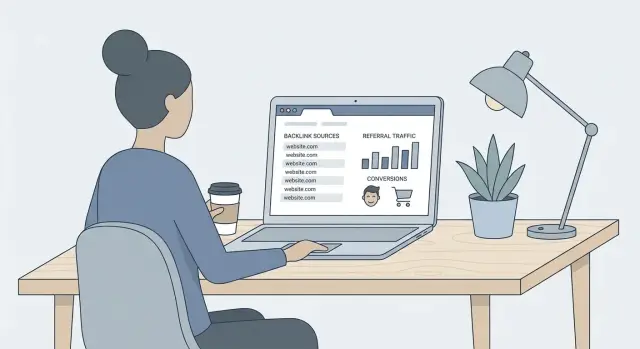
Why authority alone is not enough
A link can look amazing on paper and still do nothing for you. Many high-metric sites have tons of pages, old links, and traffic that never reaches the page where your link sits. If the page is buried, rarely read, or aimed at a different audience, you can get zero real visitors even if the domain looks "strong."
"Qualified visits" means more than clicks. It's traffic that has a real chance to lead to the next step: a signup, quote request, purchase, demo, or at least meaningful time on site. A hundred random visitors who bounce in three seconds can be less valuable than ten visitors who actually need what you offer.
Authority metrics still matter. They're a useful first filter and a basic risk check to avoid spammy sites. They can also hint at how likely a site is to get crawled and pass SEO value. The problem is that these scores don't tell you whether a specific page gets read today, whether your link will be noticed, or whether readers will care.
Authority often misses:
- Pages with little or no ongoing traffic, even if the domain is famous
- An audience mismatch (wrong industry, wrong buyer stage)
- Links placed where people don't click (footer, author bio, "resources" dump)
- Topics that are too broad to create a reason to visit your site
- Outdated content that stopped getting attention months ago
A simple example: you get offered a link on a well-known tech publication, but it's inside a long "partner" page that few people visit. Meanwhile, a smaller niche blog runs a weekly roundup your exact buyers read and share. The second option can drive fewer total clicks, but more of the right clicks.
The real goal is to predict traffic and outcomes before you buy or pursue a link. That's why traffic signals and placement context matter as much as the domain name.
Traffic signals that matter most
If you're measuring backlink quality, focus on signals that predict real clicks and real buyers, not just a higher number in an SEO tool.
A strong backlink source usually shows a few patterns that are hard to fake and easy to reason about.
The signals to look for
Steady referral traffic, not spikes. A page that brings a few visits every week for months is often more valuable than a page that spikes once and goes quiet. Spikes happen after a newsletter send, a viral post, or a temporary trend.
Clear relevance between the page and your offer. When the topic matches what you sell, readers are already warmed up. A link from a page about email deliverability will usually send better visits to an email tool than a generic "top SaaS" list.
In-content placement that feels natural. Links placed inside the main text, near a useful point, get clicks. Footer, sidebar, and generic "resources" blocks are easy to scroll past.
Audience intent match. Ask why someone is reading that page. Are they learning, comparing options, or ready to buy? A how-to guide can send curious visitors. A "best tools" roundup can send people closer to purchase.
Staying power. Pages that keep their rankings keep sending visits. Updated dates, active authors, and evergreen topics are good signs.
A quick way to think about it
Imagine two links with similar authority. One sits inside a well-ranked tutorial that solves a common problem and gets updated twice a year. The other sits in a sitewide footer of a large site.
Even if the footer link looks "strong" on paper, the tutorial link is far more likely to earn referral traffic backlinks from people who actually want what you offer.
How to estimate real traffic without special tools
You don't need expensive SEO software to get a decent read on whether a page can send visits. You can learn a lot by looking at what's visible on the page and how easy it is to find.
Start with the obvious: does the page look like people actually see it? Visible traffic usually leaves small signs of life.
Signs a page gets real eyes:
- Fresh updates (recent dates, new resources added)
- Real engagement (human comments, author replies, a discussion that makes sense)
- Sharing proof (share counts or visible reposts if the site shows them)
- Clear audience fit (headlines written for readers, not stuffed with search phrases)
- Consistent publishing (a real archive, not a site that appeared last week)
Next, check discoverability on the site itself. A link placed on an orphan page (one that isn't linked from anywhere meaningful) won't send referral traffic backlinks.
Look for navigation that makes sense: the page belongs in a relevant category, appears in "related" sections, and is linked from other articles.
A quick sanity check is search. Type the brand name plus the page title (or a unique sentence from the page) into Google. If it shows up, that's a good sign it's indexed and findable. You can also search the site name plus the topic to see whether they cover it regularly.
Now watch for pages that exist mainly to host links. They often look fine at first glance, but they don't serve readers.
Red flags that suggest a link-only page:
- Dozens of outgoing links with no clear reason
- Thin, generic content stitched together from unrelated sections
- Vague author and site identity (no real team, no editorial voice)
- The page is buried in odd categories that don't match the topic
If a page feels useful even without your link, it's more likely to have real readers and send qualified visits.
Context and placement: the biggest click driver
A backlink can sit on a high-authority site and still send almost no visits. The difference is usually not the domain. It's the context: where the link appears, how it's introduced, and whether a real reader has a reason to click.
Links buried in a footer, stuffed into a "resources" page, or dropped into a long list of unrelated tools rarely get attention. People skim. They click what looks helpful in the moment.
Where the link sits matters
Placement is a simple proxy for intent. A link inside the main body of an article (especially near the point where readers are making a decision) tends to get far more clicks than a sidebar badge or an author bio link.
A strong sign is when the link is part of the explanation, not an afterthought. If a guide explains how to compare options and then points to a relevant resource, that feels natural and earns curiosity.
Anchor text changes behavior, too. Specific, benefit-focused anchors get more clicks, like "see the checklist for vetting sources" or "example outreach email." Forced anchors read like they were written for a bot, and people ignore them.
The surrounding sentence or two does most of the work. It should answer: "Why should I leave this page?" The best context sets expectations (what you'll get) and reduces risk (it's relevant, credible, quick).
Placement patterns that tend to underperform:
- "Featured on" blocks that look like ads
- Random tool roundups with no explanation for each link
- Sitewide links repeated across many pages
- Tiny links hidden under generic anchors like "website"
- Over-optimized keyword anchors that don't match the sentence
The goal is simple: pick placements that look like a genuine recommendation a reader would actually follow.
Relevance and intent: turning visits into results
A simple question tells you a lot: will the person who clicks this link actually want what's on the other side?
A link can sit on a famous site and still send useless visits if the reader's problem doesn't match your page. On the flip side, a smaller site can send fewer clicks but more sign-ups because the reader is already looking for a solution like yours.
Match the reader's problem to the page they land on
Start with the context around the link. What is the article talking about at the moment your brand appears? If the paragraph is about comparing CRM tools and your link goes to a general homepage, many visitors will bounce. They expected a comparison, not a broad pitch.
Pick a landing page that directly fulfills the promise of the link:
- The same topic in the first screen (headline and opening)
- The same language level (simple vs advanced)
- The same stage (learning vs ready to buy)
- Proof you can help (examples, numbers, screenshots)
- Few distractions from the main point
Make it easy for traffic to act
Even relevant clicks won't convert if the page is slow or confusing. Check load speed on mobile, remove clutter, and make the message obvious in seconds.
Then pick one clear next action. Not five buttons. One.
If the link comes from a best practices post, a good next action might be "Download the checklist" or "See the template." If it comes from a best tools roundup, "Start a free trial" or "Book a demo" may fit better.
A quick intent check: read the sentence before the link out loud, then read your landing page headline. If they feel like they belong together, you're close.
A simple step-by-step way to score backlink sources
If you want a repeatable way of measuring backlink quality, score each potential source the same way. The goal isn't just a strong domain. It's a link that can send the right people to the right page.
A 10-minute scoring routine
Start by writing down what a qualified visit means for you. For one site that's a booked call. For another it's a trial signup, a purchase, or an email signup.
Then run each source through this routine:
- Match the audience first. Note the topics the site publishes and who it speaks to (beginners, buyers, engineers, local customers). If you can't describe the reader in one sentence, it's a weak fit.
- Look for real readership. Scan recent posts for signs of life: active authors, fresh dates, real comments, and articles that clearly get attention.
- Predict click likelihood. Prefer links inside helpful content near the moment a reader needs a next step. Avoid footers, bios, and generic "resources" pages.
- Set an expectation and budget tier. Decide what you'll pay when the fit is perfect vs "good enough." Tie it to an outcome, not a metric.
- Score it. Rate (a) relevance, (b) readership signals, and (c) click placement from 1-5. Add them up and only pursue sources above your cutoff.
After the link goes live, treat it like an experiment. Track referral visits, time on page, and whether people take your qualified action. If a source sends traffic that bounces in seconds, lower its score next time.
Common mistakes when judging backlink quality
The biggest mistake is treating one number as the full story. A high authority score looks comforting, but it doesn't tell you whether real people see the page, trust it, or click through.
Mistake 1: Chasing a single metric and ignoring readership
A link on a page that nobody reads won't send qualified visits, even if the domain looks impressive. Scan the page like a visitor would: is it updated, does it feel cared for, and would you spend time reading it?
Mistake 2: Choosing popularity over relevance
A popular site can still be the wrong fit if it attracts the wrong audience. If you sell B2B accounting software, a link in a general entertainment roundup might bring clicks, but those clicks will bounce.
Mistake 3: Accepting link pages packed with unrelated outbound links
Pages stuffed with dozens of random outbound links often exist to sell placements, not help readers. Even if they rank, your link becomes one tiny option among many distractions.
Red flags:
- Many unrelated brands and niches listed side by side
- Thin, generic, or copied content
- Your link would be buried at the bottom with no context
- The page is clearly designed to host links, not answer a question
- Outbound links change constantly with no editorial consistency
Mistake 4: Not tracking referrals, so you never learn
Many teams place links and only watch rankings. That hides the truth: which placements brought real visits and which did nothing. Check referral traffic after a week, after a month, and again after 2-3 months. Keep a simple spreadsheet with the source page, placement date, and landing page.
Mistake 5: Sending clicks to the homepage by default
Even good referral traffic can be wasted if you send it to a generic homepage. Match the link to a page that continues the reader's journey.
If a blog mentions "how to reduce churn," sending clicks straight to pricing can feel abrupt. A focused guide or case study usually converts better.
Quick checklist before you commit to a backlink
A fast sanity check can save you from paying for links that look good on paper but send no real visits.
Before you commit, scan the site and the exact page where your link will live. You're not judging design polish. You're judging whether a real person would read it and click through.
A simple checklist:
- Recent publishing activity and signs someone maintains the site
- The page is useful even without your link (clear topic, readable, not stuffed with random links)
- Your link would sit where eyes go (within main content), with text that explains why to click
- The audience fits what you sell, not just your broad industry
- A measurement plan (tagged URL, specific landing page, one clear goal in analytics)
Example: you find a link opportunity on a well-known resources page that hasn't been updated in two years. It's mostly a long list of tools, and your link would be near the bottom. Even if the domain looks strong, the click chance is low.
Compare that to a smaller site that posts weekly and has a detailed article about a problem your customers actually have. Your link appears near the first solution mentioned, with a short explanation. That second option often drives better referral traffic and better leads.
A realistic example: picking between two link opportunities
A B2B analytics tool is choosing between two backlink options.
Option A is a famous, general tech site. It has huge authority, but the article is broad ("AI trends"), and the link would sit near the bottom in a long list of resources.
Option B is a smaller niche publication read by ops managers in logistics. The site isn't as famous, but the planned article is specific ("How to reduce late shipments with better forecasting"), and the link would be in the middle of a step-by-step section as a recommended tool.
On paper, Option A looks better. In practice, Option B often sends fewer total clicks but better leads, because the reader already has the problem your product solves. The context also makes the click feel natural, not like an ad.
To predict the outcome before you buy the link, ask: who is the reader at the moment they see the link? On a broad tech site, many readers are browsing. On a niche piece, readers are usually trying to fix something and are closer to taking action.
What to track after it goes live (use a tagged URL so you can separate this traffic):
- Week 1: referral visits and time on site for those visitors
- Week 1: trial starts or demo requests from that referral traffic (not total trials)
- Month 1: qualified conversions (trial-to-activated, demo-to-opportunity) and cost per qualified lead
- Month 1: assisted impact, like branded searches or direct visits increasing after the placement
The decision also changes by goal. If you want trial signups, the niche placement usually wins because intent is high and the article matches the product. If you want newsletter signups, the famous site can compete because casual readers may subscribe even if they won't start a trial.
Next steps: build a short list and test smart
Turn "cool sites I'd love a link from" into a short, realistic list. Ten to twenty sources is enough. Rank them by signals that suggest they can send real people who care about your topic, not just a strong metric.
A simple way to prioritize is to score each source on two things: traffic potential (do pages like yours get clicks?) and fit (would the readers actually want what you offer?). This keeps measuring backlink quality grounded in outcomes, not guesswork.
Write down a small testing budget and treat the first few placements as learning. Your goal is to identify which types of sites, pages, and placements produce qualified visits.
A lightweight tracking routine for the first month:
- Referral visits from each new link source
- Engaged sessions (time on site, pages per visit, low bounce)
- Conversions tied to that traffic (email signups, trials, purchases)
- Assisted value (did they come back later via search or direct?)
- Notes on placement (above vs below the fold, in-context vs sidebar)
After 2 to 4 weeks, keep what works and cut what doesn't. A link that sends fewer visits can still be worth it if those visitors convert. But if there's no engagement and no downstream action, don't "average it out" with authority scores.
If you want predictable placements on authoritative sites without doing outreach, services like SEOBoosty (seoboosty.com) offer curated domain inventory where you can subscribe and point a backlink to your site. Either way, use the same approach: start with a small test, track referral traffic backlinks and conversions, then scale only the sources that prove they bring qualified traffic signals.
FAQ
Why can a high-authority backlink still send zero traffic?
Because authority is a domain-level score, not a guarantee that the specific page with your link is seen or clicked. If the page is buried, outdated, or aimed at a different audience, you can get little to no referral traffic even from a famous site.
What counts as a “qualified visit” from a backlink?
A qualified visit is a click from someone who is likely to want what you offer and take a meaningful next step, such as signing up, requesting a demo, or spending real time reading. Fewer qualified visits can beat lots of random clicks that bounce immediately.
What traffic signals should I prioritize when judging a backlink source?
Start with steady readership, not one-time spikes, and make sure the page topic closely matches your product or service. Then look at whether the link would appear in the main content with a clear reason to click, not in a footer, sidebar, or generic resource dump.
How can I estimate whether a page gets real traffic without paid SEO tools?
Scan for signs the page is maintained and actually read, like recent updates, an active author, and content that feels written for humans. Also check whether the page is easy to find through the site’s navigation and whether it appears in search results when you look up the brand plus a unique phrase from the page.
Where should my link be placed to get the most clicks?
In-content links that are part of the explanation usually get clicked because they meet a need at the exact moment the reader has a question. Footer, author bio, and “featured on” style placements are easy to skip and often look like ads, so they tend to get fewer clicks.
Does anchor text affect click-through rate from backlinks?
Use anchor text that describes what the reader will get and why it helps, so the click feels low-risk and relevant. If the anchor looks forced, overly keyword-heavy, or doesn’t match the surrounding sentence, readers ignore it and the link may feel untrustworthy.
What landing page should I use for referral traffic from a backlink?
Send visitors to a page that continues the exact promise of the sentence that introduced your link, not a generic homepage by default. If the context is a how-to, land them on a matching guide, template, or checklist; if it’s a comparison, land them on a page that helps them evaluate options quickly.
How do I spot pages that exist mainly to sell links?
A link-only page often has lots of outbound links with little useful explanation, thin generic writing, and unclear site identity. Even if it looks polished, it usually exists to host links rather than help readers, so the traffic and trust you get from it are often weak.
What’s a quick scoring method to compare backlink opportunities?
Use a simple 1–5 rating for relevance, readership signals, and likely click placement, then add the scores and pursue only sources above your cutoff. After publishing, compare referral visits and on-site engagement to your “qualified action” so the score gets smarter over time.
If I use SEOBoosty, do I still need to evaluate traffic and placement context?
If you want predictable placements without negotiating outreach, SEOBoosty offers a curated inventory of authoritative domains where you can subscribe and point a backlink to your target page. Even then, treat early placements as tests and judge them by referral traffic quality and conversions, not by authority metrics alone.
Share